



Increasing MPR: How this affects the economy
Wewire Team
January 30, 2025 by Wewire Team
Economic performance is heavily dependent on monetary policies, and the Monetary Policy Rate (MPR) is one key policy the Central Bank of Nigeria employs.
MPR is the interest rate with which the CBN lends to commercial banks. The commercial banks, in turn, use this rate to benchmark their lending. The CBN sets MPR to control inflation, manage the money supply, and influence the overall economy.
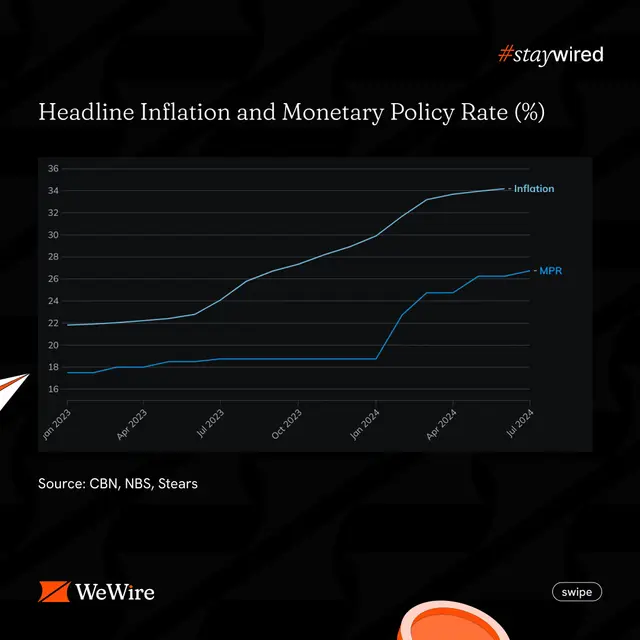
In 2024, the CBN raised MPR five times, with the first one in February. Nigeria’s MPR currently sits at 27.25% after it was raised by 50 basis points in September 2024.

Effects of increased MPR
Curb Inflation
Increasing interest rates can help control inflation by curbing overall demand in the economy. It could also help ease price pressures by reducing consumer spending and slowing down investment.
Impact on investment:
Higher interest rates can discourage investment by increasing the cost of borrowing. Companies may delay or reduce their investment plans, resulting in lower capital expenditures and potentially slowing economic growth over the medium to long term.
Higher interest on Loans and Mortgages:
Increased MPR leads to higher interest rates, which will result in increased monthly payments and overall borrowing costs. Businesses may also experience higher financing expenses, potentially hindering growth.
Exchange rate effects:
Higher interest rates can attract foreign investors looking for better returns on investments in the local currency. This increased demand for the currency may result in a short-term appreciation of the Nigerian naira.
In conclusion, though increased MPR is essential, for Nigeria it remains to be seen if the effects will drive the expected results. After an over 850 basis points increase over the past months, inflation has still risen from 29.9% to 32.15%.

The Rise and fall of Zimbabwe Gold (ZiG)
Wewire Team
January 30, 2025 by Wewire Team

In early April, Zimbabwe rolled out a new gold-backed currency called the ZiG, or Zimbabwe Gold and it is the country’s sixth currency in 25 years.
This is the latest effort by the southern African nation to tackle its prolonged currency crisis, a symptom of its ongoing economic challenges. Zimbabwe has faced persistent high inflation, with rates surpassing 500% in recent years. In March 2024, the annual inflation rate reached 55.3%, marking a seven-month high.

The ZiG was meant to mitigate the currency instability and hyperinflation that has plagued the country for decades but the results have not been as expected.
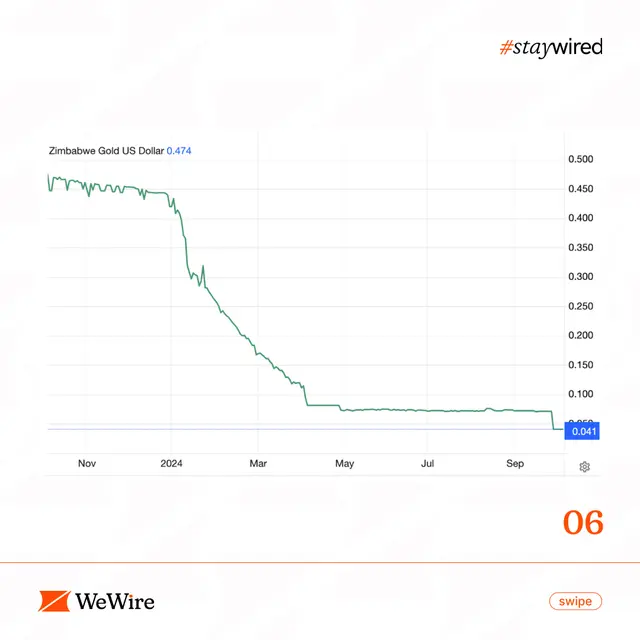
This month, Zimbabwe’s central bank devalued its gold-backed currency by more than 40% against the US dollar which signals trouble for the currency.
The Reserve Bank of Zimbabwe (RBZ) lowered the local exchange rate to 24 Zig per $1 (or £0.75). This decline is driven by rising demand for the US dollar, which is also legal tender in the country. The move follows warnings from major retailers, who threatened store closures if the rate had remained fixed at its previous level.
Before the ZiG’s sharp decline, the government had aimed to establish the gold-backed currency as the sole legal tender by 2026. It remains to be seen how this will play out
Impact of elections on economy
Wewire Team
January 30, 2025 by Wewire Team

A huge share of the world’s population will vote or have voted this year with elections happening in over g0 countries in 2024.
Recent research highlights that elections often influence global economic policy, with increased government spending, looser central bank policies, and heightened economic uncertainty typically emerging as election day approaches.
Goldman Sachs Research’s analysis of over 1,100 elections shows that, on average, primary fiscal balances drop by 0.4% of GDP in election years due to higher spending and lower revenues. This effect lingers into the following year but fades after two years.


The IMF has advised governments to exercise fiscal restraint to preserve sound public finances, activate decisive efforts to safeguard sustainable public finances and rebuild fiscal buffers. It is also important for revenue to keep up with spending over time.
Recommendations
Governments should promptly phase out crisis-era policies like energy subsidies and implement reforms to control rising spending while safeguarding the most vulnerable. In aging advanced economies, reforms are needed to manage healthcare and pension costs.
VC funding in Africa
Wewire Team
January 30, 2025 by Wewire Team

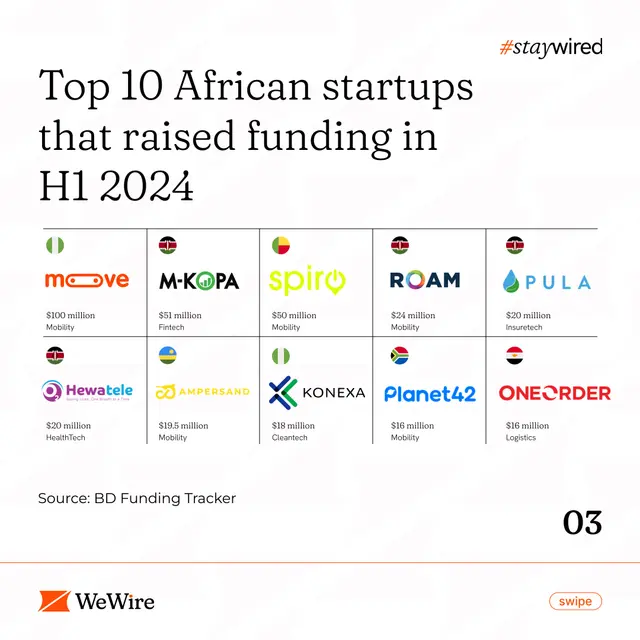
In the first half of 2024, African tech startups secured only US$530 million in funding. This is a 56% decline compared to the same period in 2023.
A total of 406 startups raised a combined total of US$2.4 billion over the course of 2023. But in light of the challenges in the African market, approximately 35.2% of investors are shifting towards geographical diversification in 2024. This strategy seeks to mitigate risk while exploring new growth opportunities.

Despite the challenging landscape, this moment presents an opportunity for reflection and adjustment within the African startup ecosystem. Both startups and investors must navigate the shifting dynamics.
For investors, this could involve gaining deeper insights into local markets, strengthening partnerships with local entrepreneurs, and supporting more robust business models. For startups, this phase may act as a catalyst for innovation under pressure, driving them to prioritize efficiency and sustainability in their operations.
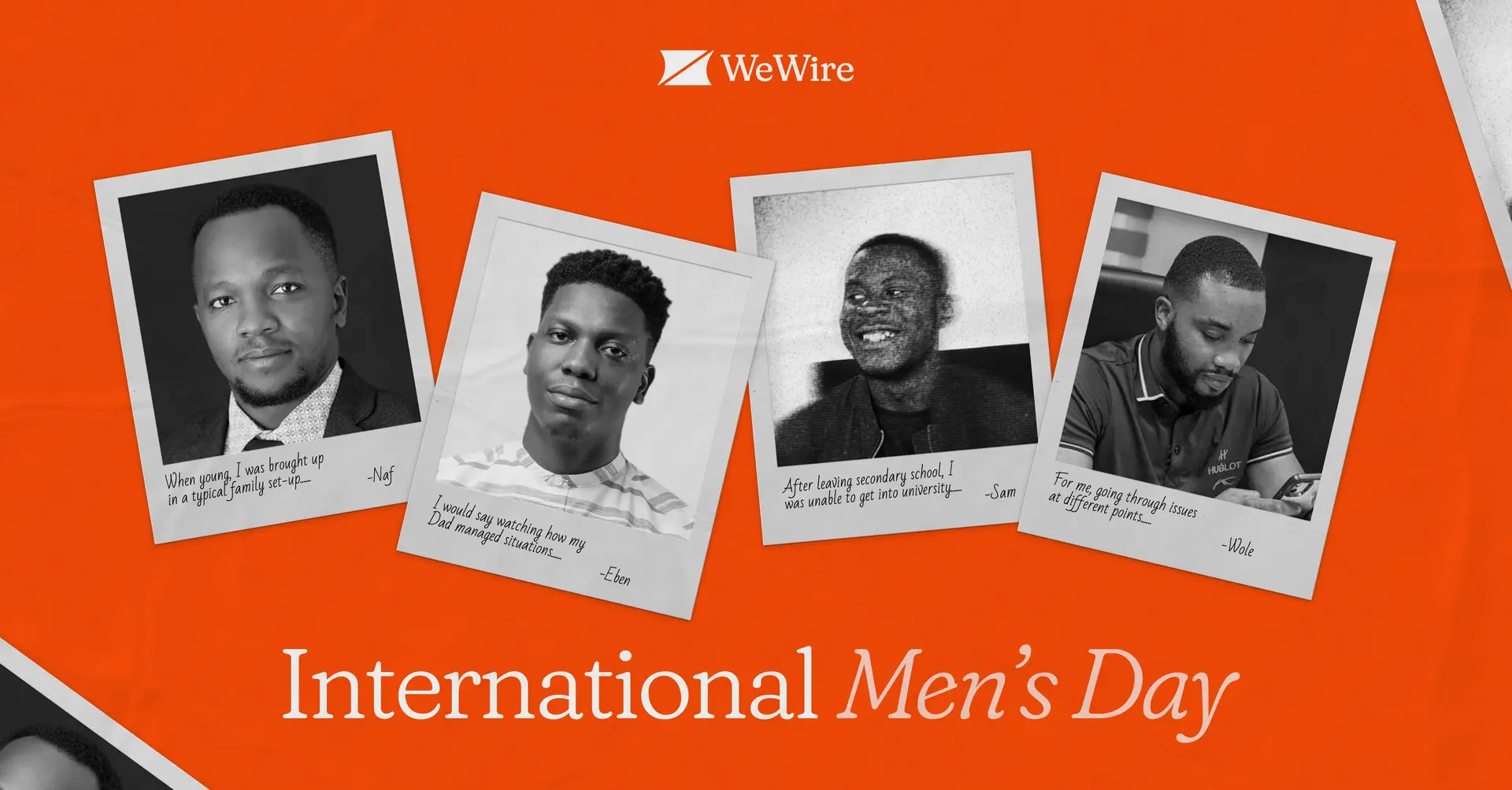
Men’s Day Conversations: The Pressures, Challenges, and Hidden Struggles Men Face
Wewire Team
January 30, 2025 by Wewire Team

Men are often the image of strength, but beyond the bravado lies a strong need for vulnerability and support. At least 1 in 8 men experience a mental health disorder globally, but men are often less likely to seek help due to stigma.
Building a society that is not only celebratory of men’s strengths but also accommodative and supportive of their weaknesses and vulnerabilities is key. As we mark this year’s International Men’s Day edition, WeWire sat with men from our global team to share their thoughts.
What experiences in life shaped your view of being a Man?
Naf, Kenya
When young, I was brought up in a typical family set-up (mother, father, siblings), and I always saw my father take the lead in providing for our family. That helped me appreciate, over time, the responsibility of providing as a man/father in the family.
What is one thing you wish more men spoke about – I wish men talked more about their true feelings. Holding back and keeping everything to oneself has long-term effects that might prove dire later.
Wole, Nigeria
For me, going through issues at different points in my life and realising I had to get myself out of it without external help shaped how I view being a man.
Eben, Ghana
I would say watching how my Dad managed situations at home and work. Listening to his lengthy advice. Fun fact: I used to think he talked a lot when I was young. Now, as an adult, I fully understand everything.
Sam, Nigeria
After leaving secondary school, I was unable to get into university like my friends, and I became depressed. I wasted a lot of time being sad about what I was going through. After a while, I picked myself up and remembered that one moment can’t and shouldn’t define your entire life. This experience guides my thoughts on manhood because now I know I can always pick myself up and use time well.
What is one thing you wish more men spoke about?
Naf
I wish men spoke more about their true feelings. Holding back and keeping everything to oneself has long-term effects that might prove dire.
Wole
I would love to see more men speak about the side effects of constantly suppressing their emotions.
Sam
Life in general. I wish more men spoke about how things affect them, from relationships, work, family, etc. I wish we spoke more about these things than make jokes about them. Even with my friends, I find that I talk more with my female friends about these things, and it could be because I grew up with sisters. But it will be more helpful that men talk about the things bothering them to each other rather than being asked to toughen up about it.
Eben
Mental health. It’s a struggle for men but is often not discussed.
What challenges have you faced that you feel are unique to men, and how have they impacted you?
Eben
There are a lot of challenges; I face them every day. For example, you are expected to show up, smile, and act normally in challenging times because your dependents will be more broken if you don’t. As a man, you always have to act rationally based on feelings.
Naf
Providing for the family. This has impacted me in a way that I would lose sleep just thinking about my family’s future.
Wole
Non-stop life pressure
Sam
You see, this money issue is crazy. The responsibilities associated with being a man in the society we are in don’t give you a lot of chances to take care of yourself. People are constantly taking from you and not giving back. Using myself as an example, I have given out so much, and the only two things I have been able to do for myself this year are rent an apartment and buy a phone.
How can we create better support systems for men?
Naf
I believe we need to create more spaces that engage men in work and life issues more frequently. Just like women have various support groups, men could also use them to enhance their lifestyles, unpack stress, and support each other.
Wole
I believe with less societal stigma around speaking up and showing actual care as opposed to gaslighting followed up with initial care, that tends to morph into mild contempt and then lead back to stigma.
Eben
Men are tough on the outside, but they generally go through a lot, especially in the African culture, where men carry responsibilities of both nuclear and extended families. I believe society needs to recognise that men also have feelings regardless of what they show or say.
Sam
I don’t believe we can create better support systems, though we can help. A man will take on so much responsibility and try to be a leader even when they are overwhelmed. I believe that just asking “How can I help?”, looking deeply and identifying what the man might need, even when he doesn’t say, goes a long way.
Conclusion
As we celebrate International Men’s Day, it is essential to go beyond lip service and begin to take proactive steps towards providing better support for men in our society. Financial responsibilities come with their unique pressures on men, but all-round support is also essential. Listen to a man today, show care, send them money from anywhere you are using WeWire, and make them feel special because they deserve it!

My UX Design Internship Experience at WeWire
Wewire Team
January 30, 2025 by Wewire Team
During my seven-week UX design internship at WeWire, one of the leading global B2B payments provider, I worked with the engineering team and gained an understanding of WeWire’s innovative products, including Invoicing for Businesses, Multi-Currency Wallets, Cross border payments and API structures utilized in their development processes.
I further developed my UX design skills by conducting a thorough review of popular apps like Bolt, Instagram, and YouTube Music, assessing their adherence to UX design principles, where I documented my findings in a LinkedIn post: Assessing UX Effectiveness in Adherence to UX . I gained a comprehensive understanding of colour theory, including the practical application of the 60-30-10 rule and the impact of colour psychology on user engagement.
Through hands-on experience with Figma, I successfully replicated the design of WeWire’s virtual cards page and created an invoice landing page.

Additionally, I applied the design thinking process to develop a solution that helps travelers to quickly and easily find the right path to their airport gate. You can find a link to my design process and proposed solution here. Regular participation in team meetings provided invaluable exposure to WeWire’s professional environment and the expertise of its employees.
I sincerely thank Ebenezer Ghanney, CEO of WeWire, for this enriching opportunity. I am also deeply grateful to Desmond Nyamador, CTO, and his team for their unwavering support and the numerous opportunities they provided to hone my UX design skills. I especially thank my mentor, Ebi-Yaa Kwaw, whose guidance was instrumental throughout my time at WeWire.

The collaborative and supportive environment at WeWire fostered a transformative learning experience. I am incredibly thankful for the willingness of everyone I interacted with to share their knowledge and expertise. This internship has solidified my career path and equipped me with the skills and knowledge to thrive in the design and tech industries.

My National Service Journey: Trade, Sales, and Client Engagement at Wewire Africa
Wewire Team
January 30, 2025 by Wewire Team

National Service is often seen as a transitional experience, a chance to discover latent abilities and navigate the real world. This journey led to a thrilling, eye-opening experience at Wewire Africa, where I dove headfirst into the world of sales, client engagement, and currency trading. This blog celebrates my time at this remarkable organization, where I learned, laughed, and gained a span-new insight into the corporate world. My name is Catherine Nortey, and this is my journey as a National Service Personnel at Wewire Africa.
Wewire Africa: A Brief Introduction
Wewire Africa is a forward-thinking startup providing cutting-edge technology solutions to solve the problem of cross-border payment across the African continent. My role as a national service worker is to assist the Trade and sales team in achieving their goals, which gave me insight into the world of sales, customer relationships, and the Fintech Industry.
The Art of Selling
My primary responsibility at Wewire Africa is in sales. I quickly learned that sales is about pushing products, building relationships, and solving problems. It’s an art, and I was eager to become a sales Picasso. Sales are the backbone of any successful business.
You must deeply understand your offering to sell a product or service. It’s not enough to know the basics; you need to be able to answer any question a potential client might have and provide them with tailored solutions. This personal touch made every sales call an adventure in itself.
Like a roller coaster, the sales world had ups and downs. But every challenge, every rejection, and every setback made the eventual success more graceful.
The Client Engagement Experience
At Wewire Africa, engaging with clients is not just a one-off task but an ongoing relationship. I quickly realized that building client relationships is just as important as making the sale. I participated in client meetings and witnessed firsthand how the team nurtured these relationships.
The Thrill of Trading
Trading is at the core of Wewire Africa’s operations. The office was like a bustling commerce, where deals and agreements were made daily and, most importantly, closing deals that would keep the company’s wheels turning. I was lucky enough to be part of the trade negotiations. It was exhilarating, like a high-stakes poker game. The art of negotiation and the thrill of closing deals are experiences I’ll never forget.
Vibrant Culture
At Wewire Africa, culture isn’t just a buzzword but a way of life! Imagine a place where creativity, innovation, and a dash of humor are mixed to create a workplace culture like no other. Our culture was a symphony of diversity and unity. We embraced individuality and celebrated the power of working together as a cohesive team, much like the many musical genres– each unique but coming together to create something remarkable in the workspace.
My national service at Wewire Africa was a thrilling journey, a lesson in culture, and an adventure of a lifetime – one that I’ll cherish forever. I gained a profound appreciation for the importance of building strong client relationships and the art of effective selling, and these skills will undoubtedly serve me well in my future career endeavors.
you’reWhether you’re a student, a recent graduate, or someone looking to make a difference during your national service, consider seeking opportunities that will allow you to develop these vital skills. Your service year can be a pivotal stepping stone in your career journey, just as it was for me at Wewire Africa. Here’s to embracing the unexpected and making every day on the job a grand adventure!

My Experience Interning At Wewire
Wewire Team
January 30, 2025 by Wewire Team

In this blog, I will be sharing my experience at WeWire Africa, a company dedicated to empowering African communities through innovative
technology solutions.
My name is Gerard Ruben Tei, a final-year student at IPMC University
studying business computing and information.
In today’s interconnected world, technology has the power to transform lives and bridge gaps like never before. Companies that harness this potential for positive change stand out, and one such organization is WeWire Africa.
When I joined WeWire Africa, I knew I had become a part of something special. The office exuded a vibrant energy, with murals depicting
African landscapes. It was an inspiring space that set the tone for the inclusive and collaborative environment within the company. Regardless of our roles or backgrounds, we all shared a common goal: using technology to make a
lasting impact.
At WeWire Africa, I had the privilege of working on projects that mattered. Wewire Africa focuses on sectors like trading, education, Marketing, and products. This meant that every day brought new challenges and opportunities to create meaningful change.
One of the standout aspects of WeWire Africa was its unwavering
commitment to personal and professional growth. The company recognized that its employees were its greatest asset and invested in their development.
Regular training sessions kept us abreast of the latest technologies and
industry trends. We were also encouraged to take ownership of our growth by pursuing certifications and exploring new areas of interest. This culture of continuous learning propelled us forward and empowered us to contribute our best.
The spirit of collaboration was deeply ingrained in WeWire Africa’s DNA.
Teams worked closely together, pooling their diverse expertise to find
innovative solutions. Ideas flowed freely, and everyone’s input was valued.
The flat hierarchy and open communication culture fostered an environment where collaboration thrived, enabling us to tackle complex challenges and drive impactful outcomes.
WeWire Africa is more than just a company; it’s a
community where everyone feels supported and inspired. The most rewarding aspect of my time at WeWire Africa was witnessing the
tangible impact of our work. Whether it was enabling small businesses to
thrive through P2P platforms. Knowing that our efforts contributed to African communities’ economic growth and well-being fueled our
passion and motivation.
Beyond the challenging projects and professional growth, WeWire Africa
fostered a culture of care and well-being. The company’s commitment to
diversity and inclusion created an environment where everyone felt respected and valued, regardless of their background.
My experience at WeWire Africa was truly transformative. The company’s
unwavering dedication to empowering communities through technology made it an exceptional workplace.
WeWire Africa taught me the power of
leveraging technology for positive change and showed me what can be
achieved when passionate individuals come together with a shared purpose. I am grateful for the invaluable lessons and experiences I gained at WeWire Africa, and I will continue to champion the mission of using
technology to create a brighter future.

WeWire is the Only Ghanaian Startup to make the 3rd Cohort of Visa Accelerator Program
Wewire Team
January 30, 2025 by Wewire Team

WeWire is excited to announce its selection as one of 19 participants in the third cohort of the Visa Accelerator Program. This prestigious program provides valuable resources, mentorship, and networking opportunities to further our mission of empowering business growth outside and across Africa.
WeWire empowers businesses in Africa and beyond to expand their reach through secure and efficient business payment solutions. Our platform facilitates seamless transactions with global suppliers, investors, clients, and partners, fostering growth and innovation.
Over the years, we have expanded our service offerings to include over 11 local and international currencies for cross-border transactions, multi-currency wallets, Smart Invoicing, Virtual IBAN (International Bank Account Numbers) Accounts, and Virtual Corporate USD Cards. We have also processed over $1bn in transactions across 80+ countries, including Nigeria, Ghana, the US, Canada, Germany, China, and many others.
There is so much more to be done, and the Visa Accelerator Program provides us with an opportunity to expand our expertise and scale our products. WeWire is proud to represent Ghana as the only Ghana-based startup among 19 participants from across 21 African countries. This intensive 3-month program backed by a trusted leader in the digital payments ecosystem will empower WeWire with industry opportunities and partnerships to innovate around our current cross-border solution, expand our reach and enable growth for even more businesses.
Speaking on the impact of the Visa Accelerator Program, Desmond Nyamador, Chief Technology Officer at WeWire, said,
“The Visa Accelerator Program has been an awesome way to connect with builders across Africa in the fintech space. We’ve all had the same challenges, so sharing experiences and collaborating has been great. It was refreshing to see how everyone approaches problem-solving. Being in the same physical environment with key founders in the fintech industry fostered a unique level of collaboration and reinforced the adage, “If you want to go fast, go alone; if you want to go far, go together.”
Building a financial infrastructure that connects Africa with the rest of the world and caters to businesses of all sizes is vital to growing Africa’s trade potential. WeWire’s payment solutions are poised to provide this solution, and scaling across more countries will foster the growth we dream of.

Inspiring Inclusion through WeWire’s You Inspire Women’s List
Wewire Team
January 30, 2025 by Wewire Team
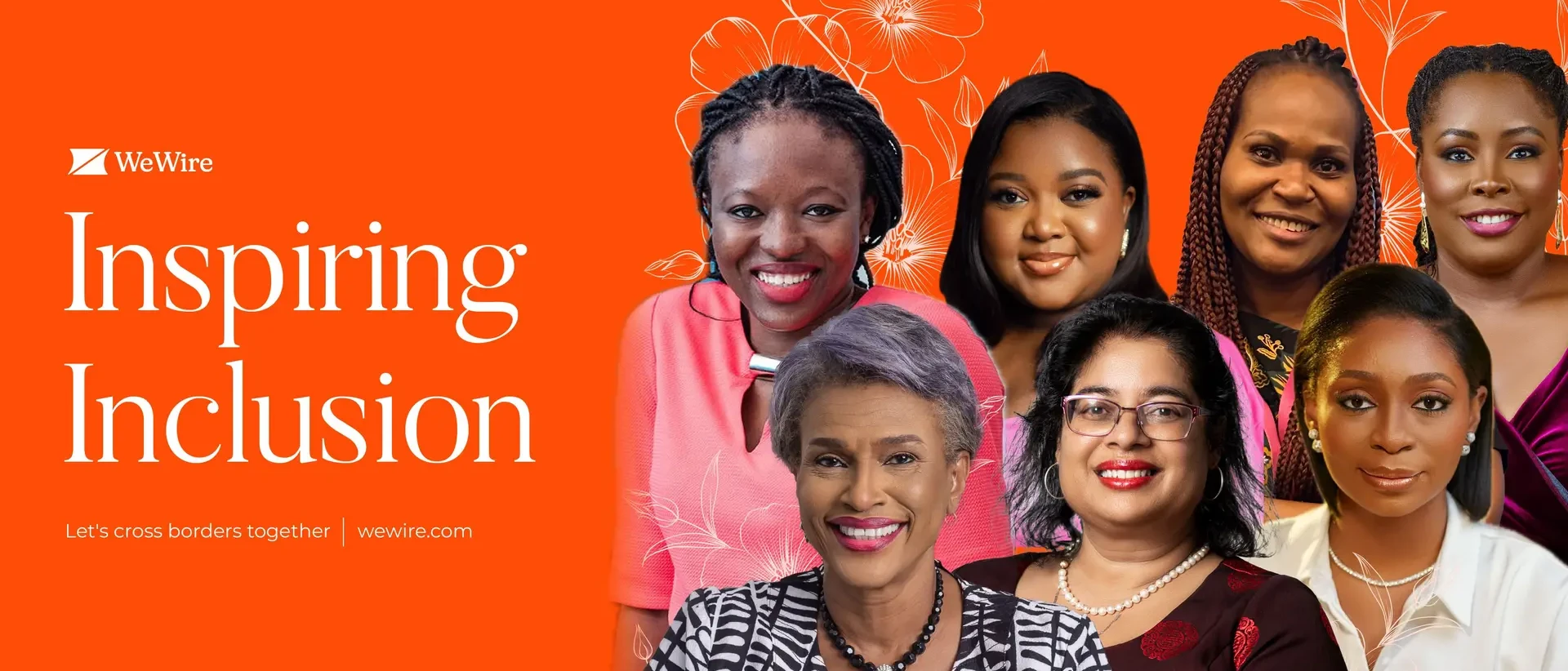
In the world today, there are ceilings and barriers, but more women and girls are breaking through these challenges by saying, “Who is going to stop us?”.
It is impossible to deny women’s limitations in the workplace and business world. Their gender is often implied and subtly inferred as a limitation rather than a strength. According to the “Women in the Workplace” report by and , women held only 38% of manager-level positions as of 2020. While regulations and policy updates are necessary to bridge this gap and break the bias, it is also vital to highlight women who have broken glass ceilings, powered through difficult terrains, and risen to the top of their fields.
For this year’s International Women’s Day, WeWire is celebrating these women who have inspired us with their grit and tenacity. These women sit at the top of their industries, leading conglomerates and multi-million dollar companies in Nigeria, Ghana, and Kenya. WeWire is an organization that is keen on driving inclusion, and our team currently boasts of almost 45% women, with a sizable number of them on our top management team. This is why we created the You Inspire Women’s List, which spotlights eight inspiring Amazons who have done amazing work across different industries, including manufacturing, tech, health, and finance.
Through this list, we want to tell women they deserve to be included at the top and that it can be done because other women have broken glass ceilings.
Seun Babajide-Duroshola
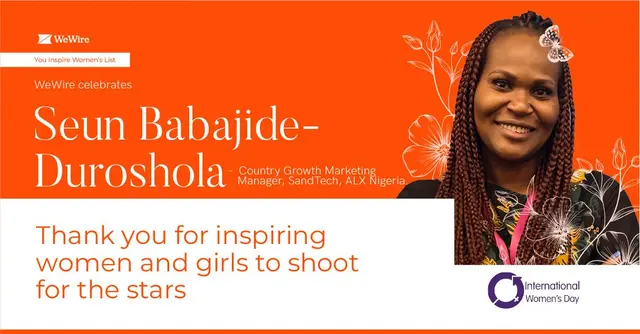
Country Growth Marketing Manager, SandTech, ALX Nigeria
Over the last 18 years, Seun has risen through the ranks thanks to her hard work and ability to deliver valuable marketing strategies for clients at all stages of their business. Seun Babajide-Duroshola holds a Bachelor of Science in Management & International Studies from the University of Salford, Manchester, UK. She has held pivotal roles in renowned organizations, including Microsoft, where she was the Enterprise Skilling Program Manager for Microsoft 4Afrika MEA.
Seun also worked as Senior Brand Manager at X3M Ideas, a leading Advertising Agency in Nigeria, where she managed a diverse portfolio of brands, including telecom giant Etisalat (now 9mobile), leading entertainment provider DStv, multinational conglomerate British American Tobacco (BAT), financial services provider Interswitch (Verve Card), and others.
Seun is passionate about exploring new experiences, discovering different cultures through travel, and indulging in diverse cuisines. One can draw a straight line through her diverse interests and her ability to craft the most dynamic marketing strategies that work. Her work at SandTech Technologies through ALX Nigeria has seen thousands of women learn digital skills and equip themselves for take-off.
Temilola Adepetun
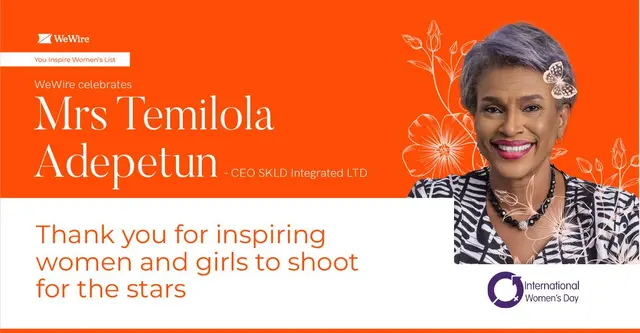
Chief Executive Officer, SKLD Integrated Services
The expansion of SKLD is a testament to her incredible drive for growth and excellence. She launched Nigeria’s flagship uniform brand, serving over 500 schools nationwide, and established a garment production facility employing 95 garment workers and producing over 4,000 garments per month.
Before starting her company, Temilola Adepetun led strategic departments such as Economics & Planning, Treasury, Insurance, and Human Resources in the Oil and gas Sector. As a woman keen on philanthropy and empowering other women, she is a Life Member of Women in Management and Business (WIMBIZ) and the Vice Chairperson of the Board of Directors at C.O.P.E. Foundation, an NGO that provides breast cancer awareness and resources for women.
Yasmin Chandani
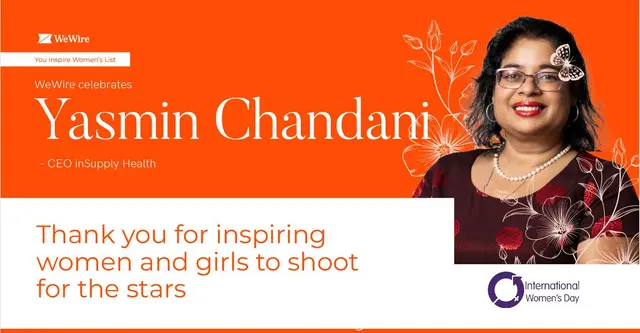
CEO, InSupply Health
Yasmin Chandani is dedicated to improving people’s access to essential health products and services. It is a passion that drives her and has seen her spend over 25 years supporting and advising national governments, NGOs, and multilateral partners in the strategy, design, implementation, and measurement of robust and sustainable supply chains for health.
Yasmin Chandani has worked in 15 countries and served as a director of multi-country, multi-year, complex initiatives. She spearheads teams in creating innovative supply chain solutions for emerging healthcare initiatives.
Yasmin Chandani’s extensive experience, dedication to quality, and advocacy for professionalization make her a highly respected figure in healthcare supply chain management. Her contributions have profoundly impacted access to essential health services and building capacity within the supply chain workforce, ultimately advancing health outcomes across East Africa and beyond.
Victoria Ajayi

Chief Operating Officer, WeWire
Victoria is a seasoned, transformational leader with 13 years of experience across different fields, including banking, strategy and deals advisory, and fintech. She worked in banking and then as a Management Consultant with one of the big four, PwC, for over six years. During that time, she spearheaded several strategic projects, from setting up a bank to developing cost optimization and business expansion strategies for financial and non-financial institutions.
Victoria also led Strategic Implementation at Flutterwave, one of Africa’s most significant tech players, and served as the Chief Strategy Officer at Descasio, one of Nigeria’s foremost cloud services companies. She currently serves as the COO of WeWire, a B2B cross-border FinTech revolutionising how businesses of all sizes payout and collect money across countries. She is helping to accelerate the company’s growth through seamless and efficient processes.
Victoria was recently part of the transformation committee set up by the NIGCOMSAT, a department of Nigeria’s ministry of digital economy. The committee was tasked with developing and launching a strategy and execution plan for building lasting solutions for public-private partnerships towards strengthening the Nigerian satellite and communications industry.
She is known to be highly passionate about scaling small and medium businesses, driving profitability, and women’s empowerment. Outside of work, Victoria is an aviation and fashion enthusiast. She also loves to spend her free time watching movies and predicting their outcomes.
Ized Uanikhehi

Founder and CEO of Zedi
Ized Uanikhehi is the visionary behind Zedi, a forward-thinking enterprise dedicated to fostering the growth of startups. Additionally, she is the driving force behind DigiClan, the largest now global community of digital marketing professionals and enthusiasts. With over 14 years post-college experience in management, business development, and marketing, Ized has spent the last nine years changing the digital marketing landscape of Africa through her works and adopting digital technology for advocacy and business growth.
Ized is a globally recognized thought leader and speaker with a record of appearances on stages and panels worldwide. She has collaborated with multi-billion naira international and local brands, including roles as a Social Producer at CNN and Director of Marketing at MAX.ai.
She has founded startups like TORA and Loose Media. Ized is passionate about building and growing beloved brands in Nigeria, Africa, and beyond, and she thrives on taking on challenging tasks. She has a proven record of developing and executing numerous creative digital strategies and campaigns. She aims to bridge the digital gender divide through community and collaboration efforts.
Regina Honu
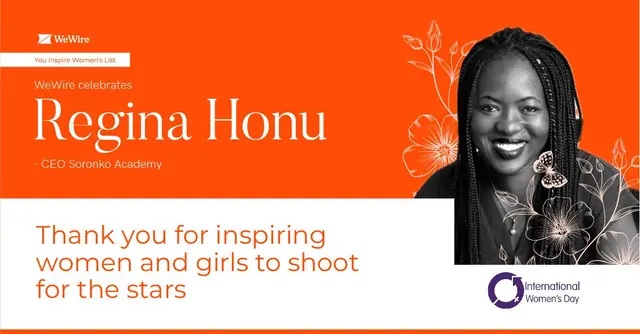
CEO, Soronko Academy
Regina Honu, CEO of Soronko Academy, is a pioneering figure in Africa’s tech and coding scene. She’s renowned for empowering youth, especially women, with essential skills for economic empowerment. She was recognized for her contributions and was named to the 2021 Quartz Africa Innovators List.
Under Regina’s leadership, Soronko Academy has trained over 32,500 women & girls and expanded to include boys, men, and children with disabilities. In September 2021, she was appointed as a Leadership Champion at the Women Entrepreneurs Finance Initiative (We-Fi) at the World Bank.
Regina’s achievements include winning the Most Impactful Initiative at the 2020 Women in Tech Global Awards and the 2018 AFS Active Global Citizen Award. In 2017, she was recognized as one of BBC’s 100 Most Inspirational Women and served as a role model in TVET. As a global tech and leadership figure, Regina Honu partners with initiatives like the Mastercard Foundation’s Young Africa Works to empower 2.1 million Ghanaian women with dignified employment opportunities.
Norvisi Sokpe

Senior Manager, Strategy & Insights for West Africa, Danone
Norvisi sees problems as challenges to be conquered. Throughout her 12-year marketing career, she has solved problems for brands, delivered award-winning campaigns, and been at the forefront of marketing strategies for companies across Sub-Saharan Africa.
Norvisi has a bachelor of Arts degree in Modern Languages and Sociology and is a fluent English and French speaker; she has led strategy and insights teams in the Ghanaian, Nigerian, and Francophone markets. The three things that matter most to Norvisi…RESULTS RESULTS and RESULTS: She has lots of them to show.
Norvisi has conducted research in 22 African countries. She was previously the Senior Researcher for Africa and LATAM within Twitter’s(now X) Global Participation team and an EMEA lead for Twitter Women. She enjoys mentoring younger professionals and is passionate about inspiring more African women to want more for themselves and work diligently to achieve it.
Gloria Atakora

Head of Compliance, WeWire
Gloria has spent over ten years in the banking and finance sector working as Business Relationship Manager. Her success as a Business Relationship Manager at Access Bank saw her work with clients across different industries and ensure full compliance to regulations. She now works as the Head of Compliance at WeWire, a B2B cross-border FinTech revolutionising how businesses make cross-border payments.
She spends a lot of time evaluating records and digital information to assess risk and compliance concerns. Gloria is keen on delivering quality work and helping others do their best work so it is no surprise that she has several Best Employee Awards to her name.
Conclusion
These stories of resilience, determination, and success, stand as beacons of inspiration to women across the continent.
Seun, Temilola, Yasmin, Gloria, Victoria, Ized, Regina, Norvisi—each name represents overcoming obstacles, shattering stereotypes, and carving paths where none seemed possible. Their achievements resonate far beyond the boundaries of their industries; they echo in the hearts of every woman striving to claim her place at the table, lead, innovate, and inspire.
As WeWire proudly celebrates these extraordinary women on International Women’s Day, let their stories serve as a reminder: barriers may exist but are not insurmountable. With unwavering determination and collective support, we can rewrite the narrative, redefine the norms, and create a world where every woman hears those empowering words, “Go for it,” and knows it can be done.
Together, let’s continue to champion inclusivity, celebrate diversity, and uplift one another. In our unity lies the power to break barriers, defy limitations, and pave the way for a brighter, more equitable future.
Happy International Women’s Day 🩷