



Meet the Dollar on TikTok: How Gen Z in Africa Built Their Own Reserve Currency
February 25, 2026 by johneb492254456
In bustling online spaces from Lagos to Nairobi, young Africans are quietly rewriting the rules of money by turning to dollar-pegged digital assets that they access and learn about directly on their phones. This movement has grown from necessity in economies marked by volatility, where traditional banking often falls short, into a vibrant, community-led system that gives everyday users control over stable value storage and borderless transfers. What makes it stand out is how knowledge spreads not through formal institutions but via quick videos, group chats, and peer recommendations that turn smartphones into personal finance hubs, allowing a generation to build resilience one tap at a time.
Sub-Saharan economies continue to navigate persistent challenges around local currency stability, as documented by the International Monetary Fund, where depreciations against the US dollar transmit sizable inflationary effects that can linger for up to two years. In Nigeria the naira has faced repeated pressures leading to sharp value losses, while the Angolan kwanza dropped more than 60 percent in value since mid-2023 amid broader supply and external shocks tracked by IMF staff reports. The World Bank has similarly highlighted divergent inflation paths across the region, with many countries seeing elevated food and import costs tied to exchange-rate movements that erode savings and complicate cross-border trade for ordinary households. These realities have left young people searching for tools that can shield their earnings and remittances from such swings without relying on scarce physical dollars or expensive bank channels.
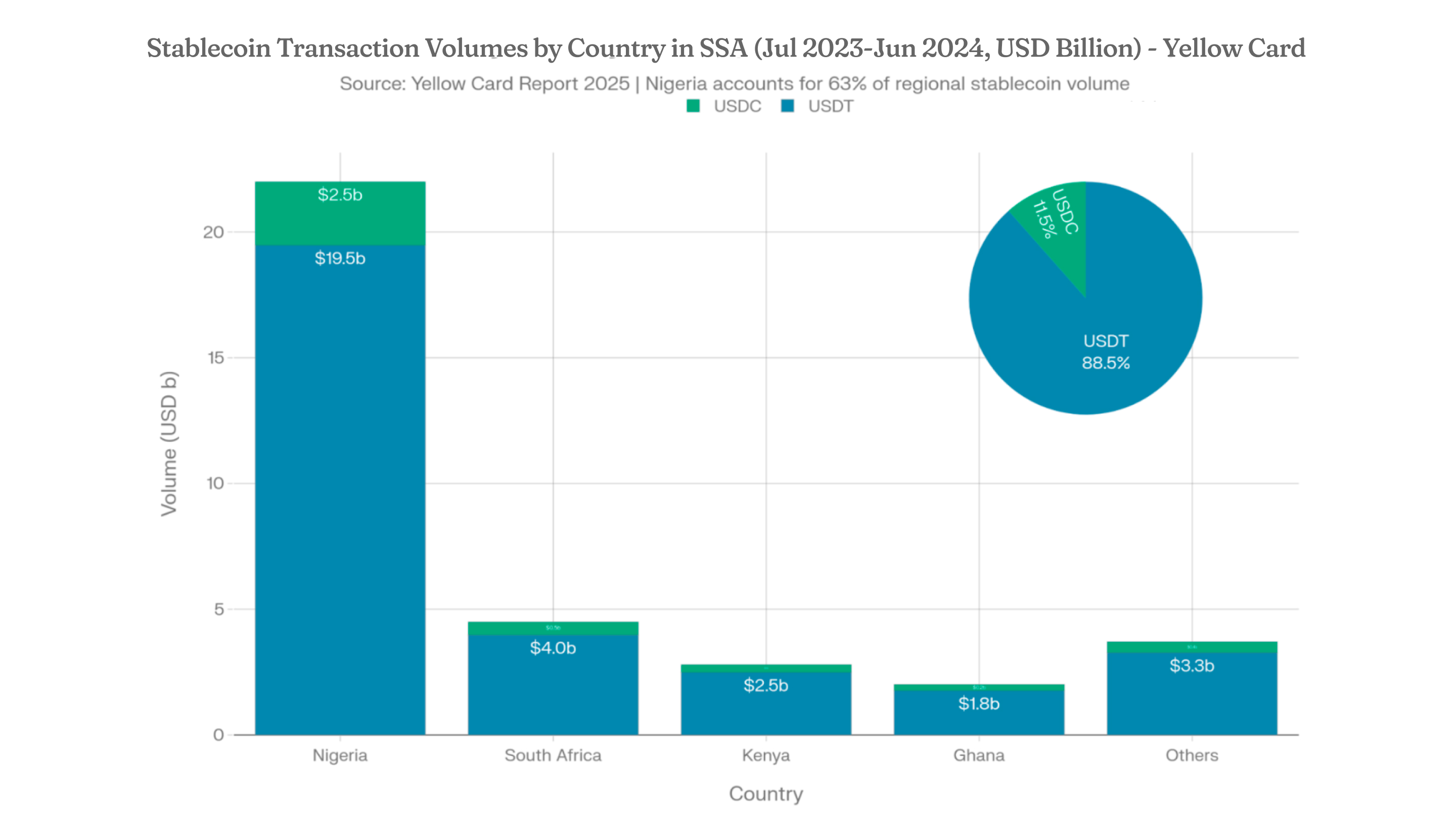
Stablecoins pegged to the US dollar have stepped in as reliable stores of value and transfer mechanisms, offering near-instant settlement at minimal cost compared with legacy systems. According to Yellow Card’s analysis of emerging-market activity, these assets represented 43 percent of total cryptocurrency transaction volume across Sub-Saharan Africa in 2024, with Nigeria alone accounting for nearly 22 billion dollars in stablecoin flows between July 2023 and June 2024 and USDT handling the vast majority at roughly 88.5 percent within that platform’s volume. Users turn to them for hedging daily expenses, paying international suppliers, and receiving family remittances because the peg provides predictability in environments where local currencies fluctuate sharply, effectively letting individuals hold and move dollars digitally without needing a traditional foreign-currency bank account.
Short videos and group conversations have transformed how financial know-how travels, with platforms such as TikTok hosting quick tutorials on wallet creation and trading, while Telegram communities dedicated to crypto have expanded by 189 percent since early 2023 to reach over three million users continent-wide. WhatsApp groups serve as daily support networks where peers exchange tips on converting local money into stable assets or navigating peer-to-peer marketplaces, filling the gap left by limited formal education on digital tools. This organic ecosystem appeals strongly to tech-native young adults who share real-time successes and warnings, turning what once required bank visits or costly advisors into accessible, trust-based learning that fits into busy lives.
Chainalysis data for the period July 2024 to June 2025 places Sub-Saharan Africa as the third-fastest-growing cryptocurrency region globally, with more than 205 billion dollars in on-chain value received a 52 percent rise year-over-year much of it coming through small retail transfers under 10,000 dollars that reflect everyday use by tech-savvy younger users. Nigeria stood out with 92.1 billion dollars in on-chain receipts during that window, while a broad YouGov survey across 15 countries in early 2026 found nearly 80 percent of respondents in both Nigeria and South Africa already holding stablecoins, with more than 75 percent intending to add more in the year ahead. In Nigeria the preference was especially pronounced, as 95 percent of surveyed individuals said they would rather receive payments in stablecoins than in the naira, underscoring how these tools have become embedded in daily financial routines for a generation seeking control and predictability.
By choosing stablecoins, users cut remittance expenses dramatically in a region where sending 100 dollars can traditionally cost up to 30 dollars to neighboring countries, as highlighted in discussions around the YouGov findings. Chainalysis notes that Africa’s activity ranks notably high when scaled against GDP, placing the region second globally in certain relative measures and ahead of many peers in grassroots momentum. This bottom-up pattern shows how digitally connected populations can self-organize around value-preserving tools faster than institutions adapt, offering a model of inclusion for other volatile emerging markets while also prompting central banks worldwide to consider how widespread dollar-pegged digital holdings might influence local monetary policy and capital flows.
Looking forward, clearer regulatory steps such as Nigeria’s 2025 frameworks classifying stablecoins and the launch of initiatives like the continent’s first regulated stablecoin projects, could help integrate these tools more safely into broader economies while preserving innovation. For Gen Z across Africa this represents genuine agency, turning economic headwinds into a platform for global participation and personal financial security through community-driven learning. At the same time, ongoing dialogue between users, platforms, and policymakers will be essential to harness the benefits of faster, cheaper finance while addressing concerns around local currency usage and long-term stability, ensuring the digital dollar on TikTok strengthens rather than sidelines national systems.