



The 2030 Factory Floor: Data, Not Dust
October 29, 2025 by johneb492254456
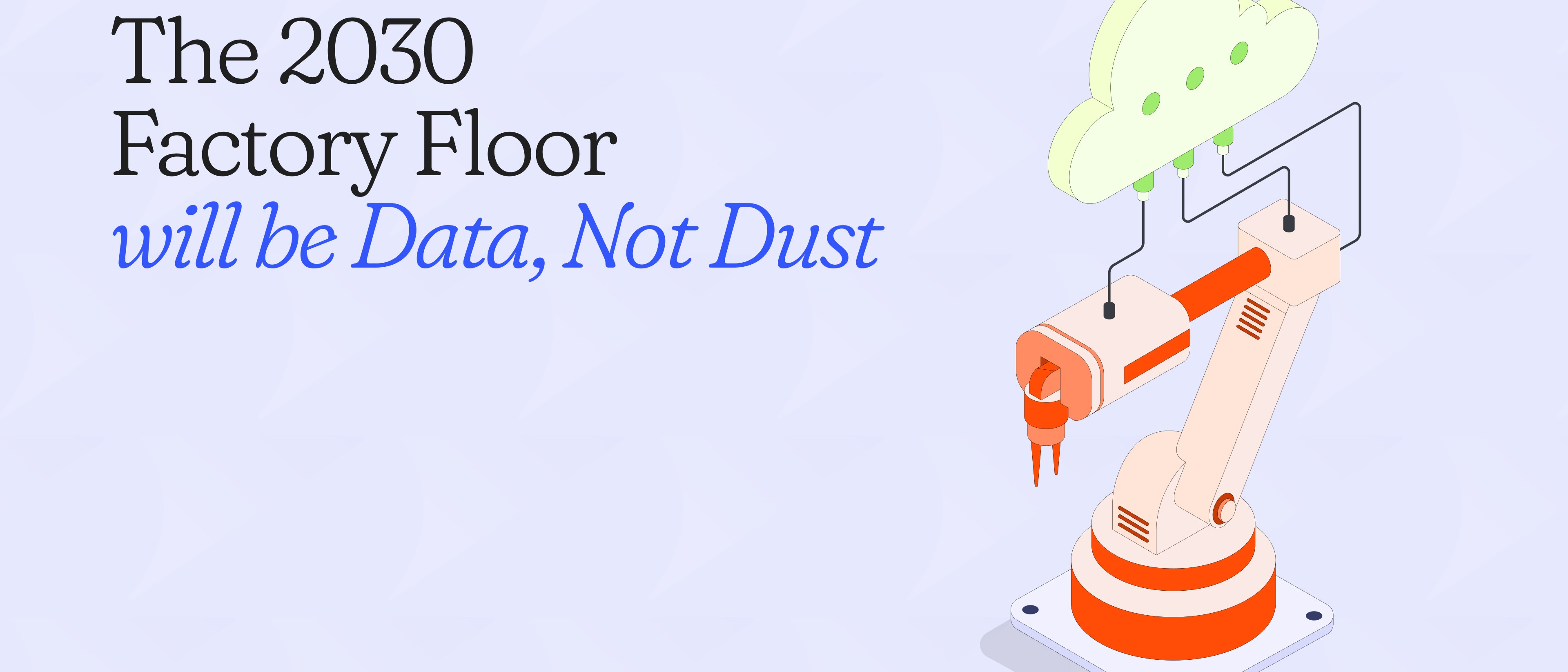
The next decade will see factory floors become data engines rather than just assembly lines. Advanced factories will “no longer [be] just sites of production” but rather “intelligent ecosystems” where connected machines and AI constantly communicate. Manufacturers are already treating this shift as critical: by 2019, roughly 68% of companies said Industry 4.0 (the digitization of manufacturing) was a top strategic priority, with 70% already piloting new smart technologies. In short, the “dust” of old machinery is giving way to a new era where every robot arm, sensor and meter on the shop floor generates streams of data. This data – ranging from vibration logs to energy use – will be continuously fed into analytics engines and AI models, transforming raw numbers into insights.
Modern factories rely on a convergence of technologies to capture and act on data. The Internet of Things (IoT) is now ubiquitous on the shop floor: low-cost sensors and RFID tags can monitor machines, inventory and environment in real time. Indeed, the total number of IoT-connected devices worldwide is expected to jump from about 9.7 billion in 2020 to over 29 billion by 2030. These devices feed data into cloud platforms and edge-computing nodes, where AI and machine learning turn the torrents of sensor readings into actionable patterns. In the language of Industry 4.0, manufacturing is being “powered by data, connectivity, and advanced analytics”.
As factories churn out ever more data, the real advantage comes from analyzing that data. Manufacturers report that data volumes are already surging: in one survey, nearly half of respondents said the amount of data they collect has doubled in just two years and will triple by 2030. Crucially, firms are moving beyond record-keeping to predictive analytics. For instance, predictive maintenance uses IoT sensors and AI to flag equipment issues before failure. Analysts project this market will explode from roughly $7.9 billion in 2022 to over $60 billion by 2030, reflecting how valuable uptime has become.
 In practice, a failing motor might automatically trigger an alert and schedule a technician before any breakdown occurs. Meanwhile, factories increasingly use AI models to predict quality issues or optimize energy use in real time. Notably, 95% of manufacturers say using data in this way leads to faster and higher-quality decision-making. In other words, data flows will underpin nearly every production decision by 2030.
The payoff from data-centric factories is significant productivity and cost improvements. By continually mining sensor data, factories can squeeze out waste, reduce defects, and run leaner. For example, AI-driven scheduling can balance workloads across shifts, while real-time dashboards let managers spot bottlenecks as they emerge. This has economic impact: one analysis finds companies using smart-factory technology cut downtime and boost output substantially. Survey data bear this out: 86% of manufacturing leaders believe that effective use of data will be “essential” for competitiveness in the coming years. In monetary terms, analysts project enormous growth in smart-manufacturing sectors – from industrial robotics to digital twins – as factories invest in data capabilities. Factories will also monetize data through services (like selling digital twin simulations or performance warranties).
By 2030 the most valuable output of a factory may be its data streams rather than just widgets. Leading economies recognize this. For instance, Germany’s digital economy (which includes smart manufacturing) is already worth around $250 billion in 2024 and growing. National plans like Europe’s Industrie 4.0 platform and China’s smart manufacturing initiatives explicitly treat data as a resource. Germany even emphasizes “digital sovereignty” – aiming to control domestic data flows and reduce reliance on foreign tech.. Practically, this means factories will sell more than cars or chips: they will offer continuous data-driven services.
As we look toward 2030, several themes emerge. Factories will resemble data centers as much as workshops. Success will require new skills: companies must invest heavily in upskilling and cybersecurity as manual tasks give way to data analysis and software control. Policies will need to adapt too, with standards for data sharing, privacy, and cross-border flows. Investors and managers should note the opportunity: according to a Bloomberg analysis, in manufacturing “data is the new currency”. In summary, the competitive edge of tomorrow’s manufacturing economy will rest on who can collect, interpret and capitalize on factory data most effectively. The dusty assembly line is being swept away by a wave of data-driven efficiency and innovation – and those who seize this digital gold rush will lead the industries of the future.