



Why the UAE’s Digital Payment Surge is a Blueprint for Emerging Markets
October 1, 2025 by johneb492254456
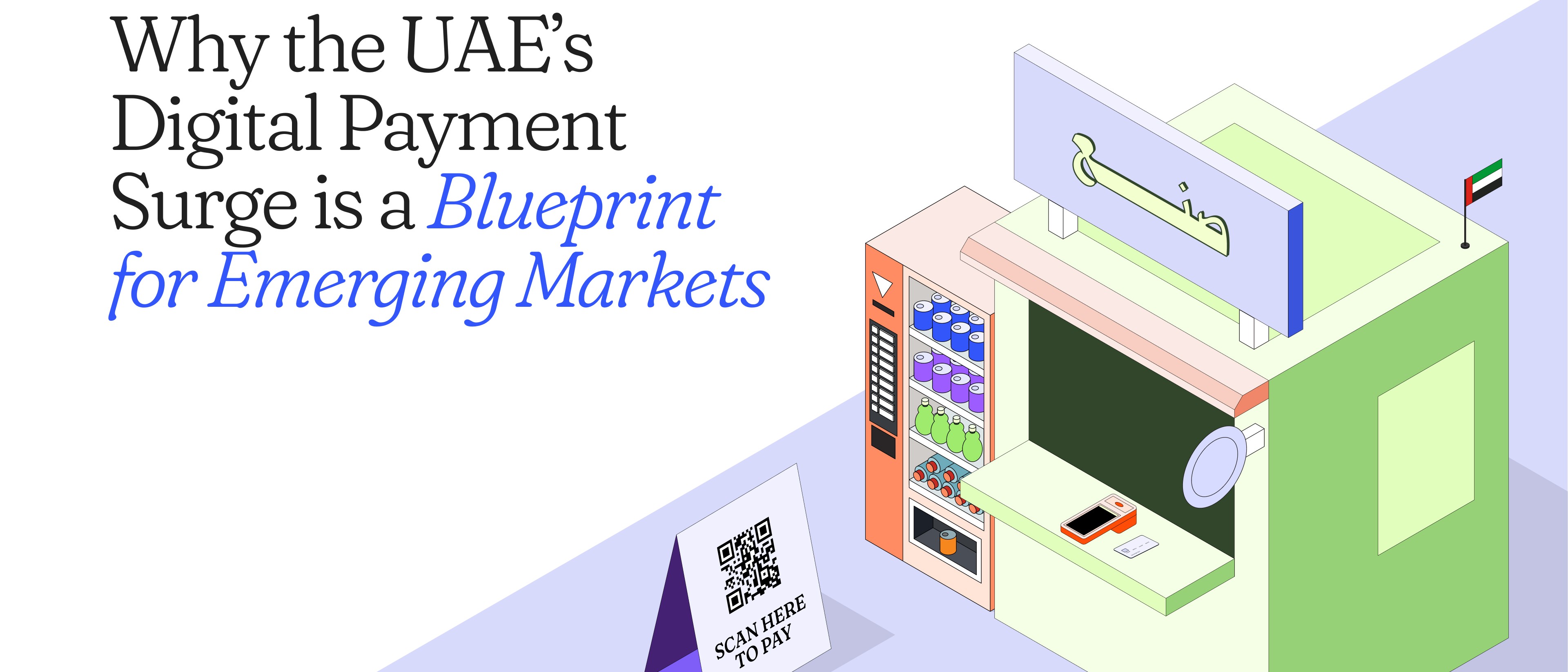
The UAE’s payments landscape has shifted dramatically in the last few years. Government policies and fintech innovation have pushed the economy away from cash towards digital methods. For example, a 2023 Central Bank programme (‘Financial Infrastructure Transformation’) explicitly targets a cashless society by modernizing payments, including open banking rules and a trial digital dirham. This effort ties into broader strategies: the 2022 Digital Economy Strategy aims to double the digital sector’s share of non-oil GDP (from 11.7% to over 20%) within a decade. Such high-level coordination illustrates the UAE setting ambitious goals and taking aggressive steps to modernize payments – a model that other emerging economies can study.
Central to this transformation is a cohesive regulatory framework. The UAE launched multiple coordinated initiatives: it mandated a unified open finance regime with APIs and consent-based data sharing, and created Al Etihad Payments (a national payments infrastructure entity) in 2023 to run shared rails. New systems were introduced, including a domestic payment card scheme (‘Jaywan’) and regulations for stablecoins. Even cross-border innovation is part of the plan: the UAE’s pilots for a digital dirham include a blockchain-based payment corridor with China. These concrete measures – all backed by federal “We the UAE 2031” and digital economy visions – show how strong policy leadership and new institutions can rapidly reshape a payment ecosystem.
The private sector has responded energetically under this supportive regime. The UAE is now among the top 20 countries worldwide for fintech adoption, having drawn over $2.5 billion in fintech investment in 2022. Innovation zones like Abu Dhabi’s ADGM and Dubai’s DIFC operate regulatory sandboxes (RegLab, Innovation Testing Licenses) where startups test new payment apps, QR solutions and blockchain services with relaxed rules. As a result, dozens of fintech firms and digital banks (for example Zand, Wio, Liv.) launched highly user-friendly apps, while legacy banks modernized their offerings.
Consumers have been quick to embrace digital options. Surveys show roughly 72% of UAE residents now prefer digital banking for its convenience and lower fees. In everyday payments, almost half of shoppers use mobile wallets (Apple Pay, Samsung Pay, bank apps, etc.), and contactless cards account for about 84% of all card transactions. The COVID-19 pandemic further accelerated this shift: non-cash payments rose from 39% of all transactions in 2018 to 73% by 2023. High smartphone penetration and trust in digital services underpin these numbers. Altogether, UAE consumers are rapidly moving away from cash, aligning their behavior with the government’s long-term cashless vision.
Concrete data confirm the transition. The UAE built advanced payment rails: its Immediate Payment Instruction (IPI) scheme and upgraded Aani network now handle 24/7 instant interbank transfers. Cross-border capabilities are being added too, with experiments linking the UAE’s digital dirham to partner countries like India. These rails support a booming e-commerce sector: online retail reached $10.8 billion in 2024 and is projected to hit $17 billion in 2025, with over 71% of those sales paid by cards or digital wallets. At the industry level, total merchant acquiring volume hit about $150 billion in 2024 (a 13–14% CAGR since 2020).

The UAE’s experience offers lessons for emerging economies worldwide. It highlights that success comes from building end-to-end ecosystems: interoperable platforms, supportive regulation, and a focus on inclusion. For example, expatriate remittances (roughly $40 billion outflows in 2023) are already 57% digital in the UAE, transforming financial flows between rich and developing nations. Similar patterns appear elsewhere: Latin America’s fintech-driven change is powered by open frameworks and instant-payment networks. Brazil’s Pix real-time system alone processed ~42 billion transactions in 2023, while digital wallets and QR payments now handle the majority of spending. In Southeast Asia, over 70% of e-commerce transactions were digital in 2023, supported by systems like Singapore’s PayNow (5.4m+ users) and Indonesia’s 45m mobile-wallet users.
Looking ahead, the UAE remains ambitious. Dubai has set a goal of 90% cashless transactions by 2026, and polls suggest many citizens expect the UAE to be fully cashless by 2030. These targets reflect confidence that the coordinated strategy will continue yielding results. The blueprint is clear: concerted government leadership plus open, inclusive technology multiplies impact. In practice this means creating robust rails (real-time payments, digital ID/CBDC), enabling new entrants (sandboxes, data sharing), and educating consumers. Emerging economies can adopt this model: by aligning regulators, banks, fintechs and even remittance platforms around a common goal, a country can replicate the UAE’s trajectory. In sum, the UAE shows that even without being a large or low-income country, a market can achieve a rapid digital payments revolution through a well-designed ecosystem – a lesson for Latin America, Asia, Africa and beyond.