



An Analysis of Commodity Cycles as the Hidden Driver of Emerging-Market Currency Stability
March 2, 2026 by johneb492254456
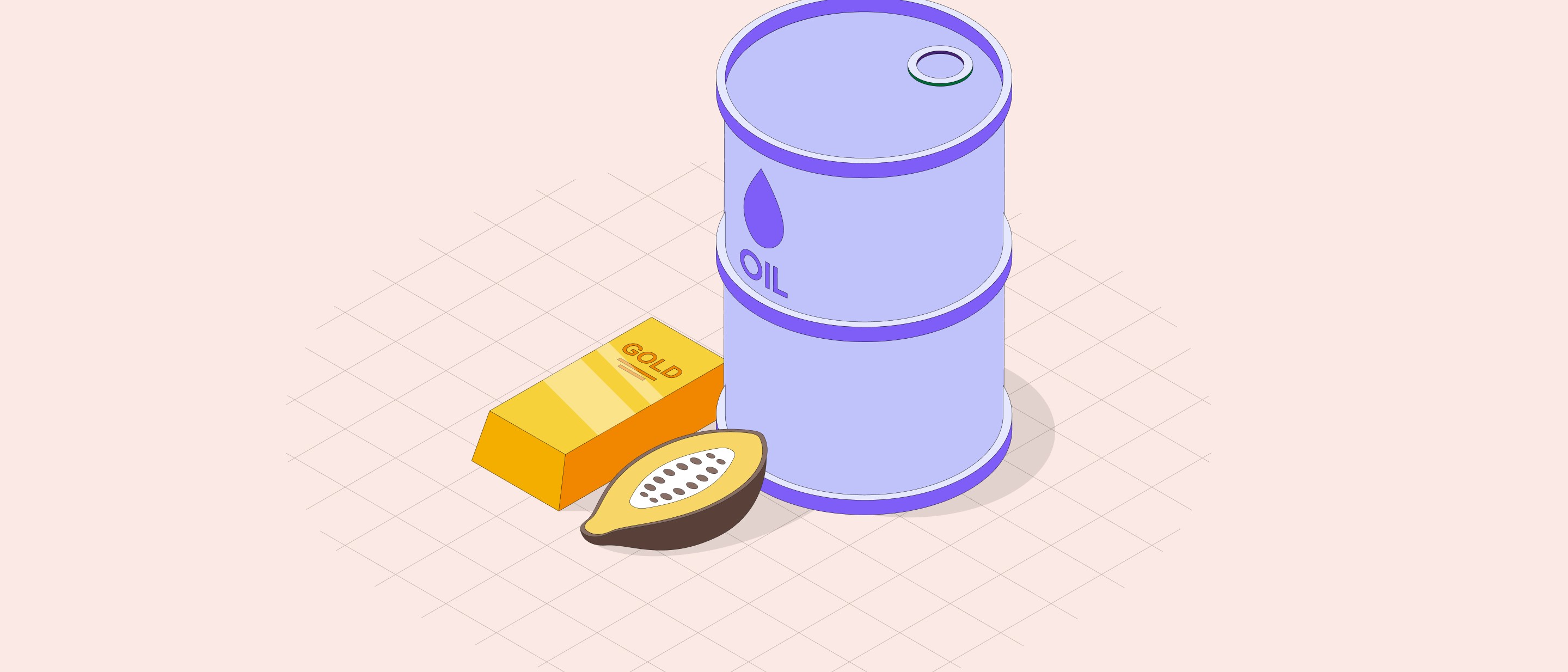
In 2024–2026, volatile commodity prices, especially cocoa, oil, and gold, have been hidden stabilizers for many emerging-market currencies. For example, soaring cocoa prices (up 172% in 2024) dramatically boosted export revenues in Ghana and the Ivory Coast, helping Ghana’s central bank build reserves and the cedi to appreciate (the cedi was about +42% stronger by mid-2025). Similarly, higher oil prices have bolstered Nigeria’s foreign exchange reserves and helped stabilize the naira (which traded below ₦1,400/$ in early 2026 as Brent rose above $69). Gold’s surge (40% higher in 2025 vs 2024) drove record trade surpluses in Peru and lifted South Africa’s terms of trade, underpinning relative stability or gains in the sol and rand. In short, commodity price cycles and emerging-market currency stability are closely linked: when export commodity prices rise, these economies often see healthier external accounts, easing exchange-rate pressure and inflation, a dynamic that influences investor confidence and central bank policy decisions.
Cocoa Cycles & West African Currencies (Ghana, Ivory Coast)
Global cocoa prices exploded in 2024 due to weather shocks in West Africa (Ghana, Ivory Coast). Cocoa jumped 172% in 2024, briefly hitting a record $13,000/ton. Analysts warned prices would stay “historically elevated” into 2025. Indeed, by October 2025, cocoa costs were still more than double early-2024 levels. (By early 2026, with better harvests on the horizon, cocoa futures began to correct – ICE cocoa prices hit multi-year lows asthe Ivory Coast/Ghana trimmed official prices.)
Ghana’s cedi: Ghana, a top cocoa exporter, saw a direct benefit. The huge jump in cocoa earnings helped Ghana rebuild its foreign reserves and support the cedi. By late 2025, Ghanaian authorities credited “higher export earnings” from cocoa (and gold) for stronger external liquidity. In fact, Ghana’s cedi appreciated sharply in 2025: it was about 42% stronger against the dollar by mid-2025. This helped Ghana climb back to a B- rating (S&P noted cocoa/gold prices have “unusually favorable” in 2025, supporting the cedi and lifting reserves from $6.8B to $11B). With more FX inflows, the Bank of Ghana could ease some exchange-rate pressure – though inflation remained high (25% in early 2024), a legacy of past devaluations.
Ivory Coast (CFA franc): Ivory Coast (world’s No.1 cocoa producer) saw its export revenues surge. Improved terms-of-trade from soaring cocoa exports helped narrow a large current-account deficit (projected to fall to 1–5% of GDP in 2024/25). The CFA franc (pegged to the euro) remained stable on the peg – inflation stayed around 3% – but higher cocoa FX earnings strengthened the regional reserves pool. (By late 2024, regional WAEMU reserves fell to low levels, but were buoyed by new Eurobond inflows and rules tightening repatriation of cocoa revenues.) In summary, rising cocoa prices in 2024–25 lifted Ghana’s and the Ivory Coast’s export receipts, which in turn underpinned their currencies. Ghana’s experience shows how a “commodity boom” can rapidly improve reserves and stabilize a currency.
Oil Cycles & Petrocurrencies (Nigeria, Venezuela)
Oil price trends 2024–2026: After peaking around $80–$90 in mid-2022, crude prices cooled by late 2024. Brent ended 2024 at $74.6/barrel, down 3% on the year. In 2025, oil mostly traded in the $60–75 range (fluctuating with OPEC+ cuts and demand concerns). By early 2026, prices were rallying again: Brent was around $69 in Feb 2026, notably above Nigeria’s budget benchmark ($64.8). (Global factors like U.S.-China relations, Iran tensions, and shifts in supply/demand drove these swings.)
Nigeria’s naira: Oil revenues are Nigeria’s FX lifeblood (80% of FX). As oil prices strengthened in late 2025/early 2026 (and after Nigeria eased FX market reforms), the naira steadied and even rallied slightly. In Feb 2026, analysts noted that the oil price rally “would largely bolster” Nigeria’s fiscal revenues, FX reserves, and promote exchange-rate stability. Indeed, the naira traded below ₦1,400/USD on the official market (a notable improvement). In 2025, the naira had its best year in over a decade: it gained roughly 7–7.5% in 2025 after having lost 41% in 2024. Commodity impact: Higher petrodollar inflows mean more USD supply, easing black-market pressure on the naira. (Of course, inflation and policy matters too – Nigeria’s inflation was 15% by end-2025 – but the oil tailwinds gave breathing room.) Analysts caution that lower oil (with current low production) could quickly pressure the naira again, highlighting the tight FX link.
Venezuela’s bolívar: Venezuela’s case is more complex. The economy still suffers hyperinflation and extensive dollarization, but oil wealth remains central. In late 2025, the interim government agreed to ship 50 million barrels of oil to the U.S., bringing in $500m; $300m of these proceeds were injected to “stabilize” the FX market and protect the bolívar. Business leaders publicly welcomed this oil-funded USD injection as a way to “regularize and stabilize the exchange system”. In practice, these moves aimed to close the gap between Venezuela’s official and black-market rates. Still, inflation was extreme: private estimates for 2025 inflation were >400%. So while higher oil export revenues provide critical hard-currency support, the bolívar’s stability remains fragile. The currency did see a dramatic change from mid-2025: the old bolívar was replaced by a new currency (pegged loosely to the “petro” crypto), with USD/VES trading around 400 by early 2026. That’s far from stable by developed-world standards, but better than its prior hyper-inflationary collapse (USD/VES peaked at 11.8 million in July 2025).
In summary, oil cycles in 2024–2026 have significantly influenced Nigeria’s and Venezuela’s currencies: higher oil prices and flows generally eased FX shortages (strengthening the naira) or allowed government FX support operations (in Venezuela), whereas low oil periods would reverse those effects.
Gold Cycles & Mining Economies (South Africa, Peru)
Gold price trends 2024–2026: Gold has been a standout commodity in 2024–25. After a mid-2022 correction, gold prices surged in 2024–2025 amid inflation and geopolitical uncertainty. Scotiabank notes gold averaged 40% higher in 2025 than in 2024 (though some cooling is expected in 2026). Precious metals benefited from safe-haven demand: the USD’s unusual weakness in late 2024/25 also helped gold (and other metals) prices. Thus, 2024–25 saw multi-year highs in many currencies: for example, in Nigeria, the naira price of gold tripled (up 121%) due to devaluations and inflation, and Venezuela saw an 84% rise in gold in bolívars. These are extreme cases of how inflation erodes currencies – investors flocked to gold.
South Africa (rand): South Africa is one of the world’s largest gold producers. Rising global gold prices help its export revenues and terms of trade. Indeed, in late 2025, the rand was noted to be strengthening alongside gold: Reuters reported on Dec 15, 2025, that the rand “strengthened” against the dollar as “higher gold prices” supported it. Local traders explicitly link Rand gains to the gold rally, and forecasts noted South African gold prices rose 30–45% in local-currency terms. While the rand also depends on many factors (like trade flows and Fed policy), the gold boom provided a tailwind. The South African Reserve Bank also cited resilient FDI inflows and stable inflation. Still, the direct link to gold is clear: when bullion is firm, miners export more revenue, giving the rand support.
Peru (sol): Peru is a major producer of gold (and copper). Soaring metals prices vastly improved Peru’s terms of trade in 2024–25. Scotiabank reports Peru ended 2025 with a record trade surplus, driven by metal exports – gold alone was on average 40% pricier than in 2024. These export gains translated into a strong sol (PEN). Remarkably, the sol “showed a surprising combination of strength and stability in 2025”: it appreciated about 5–7% on the year (around S/3.56 per USD by year-end 2025). While the primary reason cited is a very weak US dollar globally, Peru’s robust external accounts were a close second driver. In short, high gold and copper earnings gave policymakers room to cut rates and keep inflation low (consumer inflation held near 2% by the end of 2025), which in turn supported the currency. (Note: Peru’s central bank often tightens in election years, but solid trade gave it flexibility.)
Macro Factors, Inflation, and Policy Implications
These commodity-currency links interact with broader macroeconomics. Key points:
- Inflation and interest rates: Strong commodity exports can help tame inflation by reducing import costs (e.g. more oil money means less need to print currency). In Peru and Ghana, inflation fell as currencies stabilized and budget deficits shrank. Ghana’s headline inflation eased from 25.8% in early 2024 to projected mid-teens by end-2024. Nigeria’s inflation cooled to ~15% by late 2025. Central banks then had room to consider easing or at least not hiking aggressively. Conversely, if commodity prices collapse, these economies risk imported inflation and pressure on interest rates.
- Trade balance & reserves: Commodity windfalls swell foreign-exchange reserves, giving central banks firepower. Ghana’s reserves jumped from $6.8B (end-2024) to $11B (2025), largely from gold and cocoa earnings. Nigeria’s reserves have been slowly rebuilding since the 2023 reforms, aided by higher oil prices and diaspora remittances. Strong reserves reassure investors that the country can defend its currency.
- Investor perception: Rising commodity exports signal improving fundamentals, attracting capital. The S&P upgrade of Ghana in Nov 2025 explicitly cited unusually favorable cocoa/gold prices as supporting factors. Currencies showing stability (like Ghana’s cedi or the rand) build investor confidence, reducing risk premia. On the flip side, reliance on one commodity makes investors wary; e.g., analysts warn Nigeria’s rally could reverse if oil drops.
- Policy responses: Policymakers closely watch commodity cycles. Ghana negotiated modest cocoa farm-gate price increases only after the cedi had already surged (so farmers wouldn’t lose out). Nigeria’s central bank deregulated FX markets partly to let the naira find its level amid rising oil revenues. Venezuela’s interim government funneled oil export dollars into FX stabilization funds. Inflation targeting regimes (South Africa’s SARB, Peru’s BCRP) can remain credible when inflation is already low, thanks to benign import prices (falling oil/wheat) and stable exports
Conclusion
Commodity price booms have quietly underpinned currency stability in key emerging markets from 2024 through early 2026. Soaring cocoa prices in West Africa bolstered the cedi and eased balance-of-payments strains in Ghana and Ivory Coast. Rising oil prices and improved fiscal oil receipts buoyed Nigeria’s naira and gave breathing space to its economy. And gold’s bull run helped South Africa and Peru accumulate reserves and keep inflation in check, supporting their currencies. These hidden commodity cycles — intertwined with macro factors like inflation and policy — have shaped investor sentiment and central bank choices in the region. Future fluctuations in cocoa, oil, and gold will likely continue to ripple through emerging-market FX markets, making them essential bellwethers for analysts and policymakers alike.