



A Strong Dollar Is Hurting Importers — Even When Prices Look Cheaper
January 28, 2026 by johneb492254456
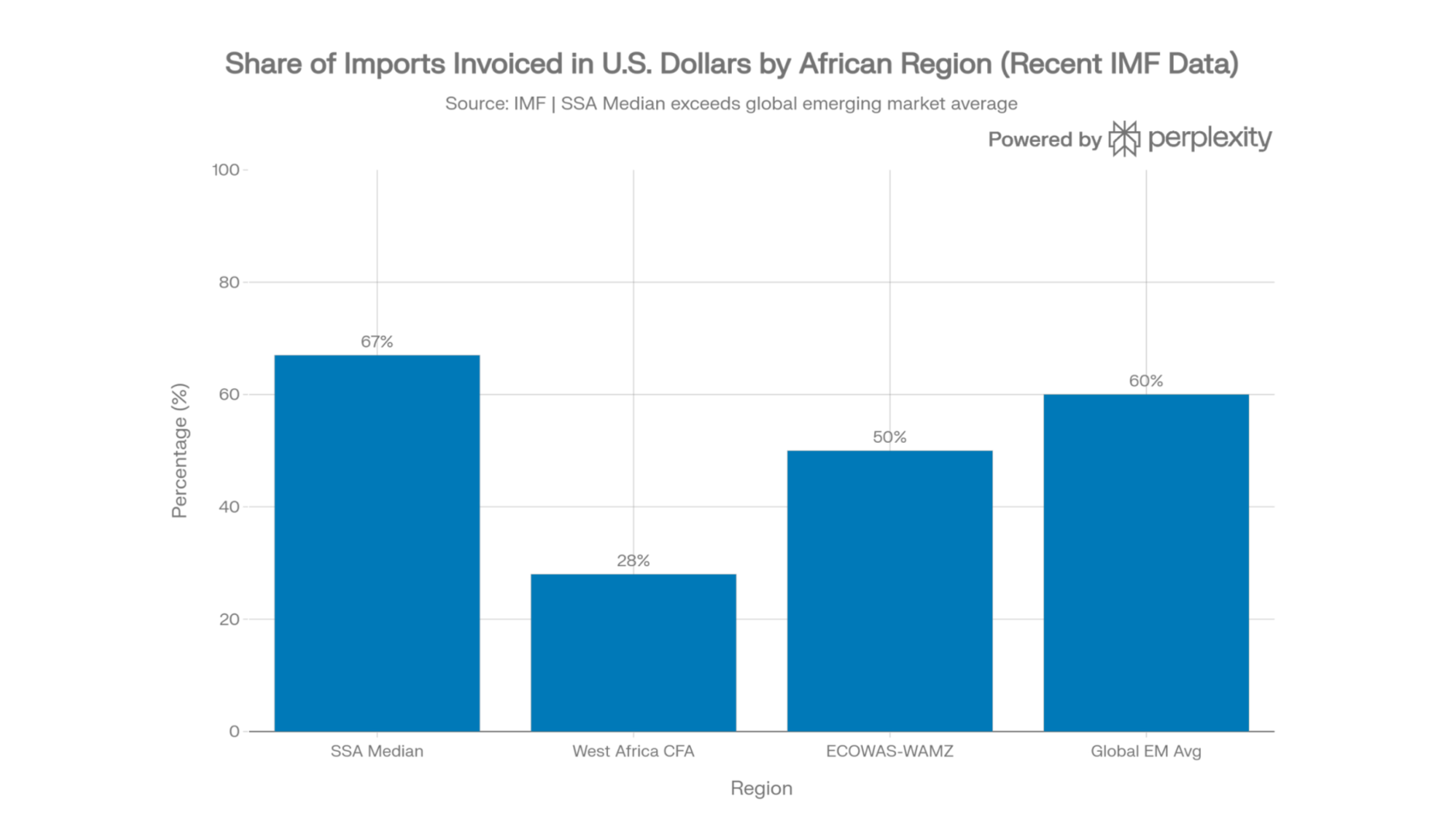
The fundamental concept that a stronger U.S. dollar benefits importers by increasing their purchasing power often fails to materialize for African businesses. For companies operating in regions like Sub-Saharan Africa, the U.S. dollar is not just a currency but a primary invoicing vehicle for over 80% of imports. Between 2022 and 2025, even as global commodity prices saw periods of cooling, the simultaneous depreciation of local currencies like the Nigerian Naira, Kenyan Shilling, and Ghanaian Cedi meant that the “local currency price” of goods rose sharply. This phenomenon, often referred to as imported inflation, ensures that the theoretical discount of a strong dollar is immediately consumed by the shrinking value of the domestic currency used to acquire those dollars.
The promise of cheaper imports assumes that suppliers maintain stable prices and that exchange rate benefits reach the end-user. However, International Monetary Fund reports indicate that global suppliers frequently adjust their dollar-denominated price lists upward to hedge against the volatility of emerging market currencies. For an African business importer, the nominal price on a Proforma Invoice might look stable, but the cost of clearing that invoice in local terms becomes a moving target. Furthermore, the prevalence of dollar-based invoicing means that African importers bear 100% of the currency risk, as most international exporters refuse to settle in local African denominations, effectively shifting the burden of dollar strength entirely onto the buyer.
 Beyond the unit price of goods, a strong dollar creates a severe cash-flow mismatch that threatens the survival of small and medium-sized enterprises. As the dollar strengthened through 2024, the amount of local currency required to fund the same volume of inventory nearly doubled in some markets. This forces business importers to divert funds from operations, marketing, and payroll just to maintain their stock levels. Many African businesses operate on credit lines denominated in local currency, which often hit their limits faster as exchange rates deteriorate. The result is a “liquidity trap” where businesses are technically profitable on a per-unit basis but are running out of cash because their working capital cannot keep pace with the dollar’s appreciation.
The era of a strong dollar between 2022 and 2025 coincided with aggressive monetary tightening by the U.S. Federal Reserve, which forced African central banks to raise their own interest rates to defend their currencies. For a business importer in Africa, this created a double-edged sword: not only did the dollar become more expensive to buy, but the cost of borrowing local currency to purchase those dollars also skyrocketed. Data from the World Bank suggests that the average cost of business loans in many African nations exceeded 20-25% during this period. These high interest rates effectively cancel out any savings from lower global prices, as the cost of financing the “time-to-market” for imported goods becomes a dominant expense.
To protect themselves from further currency slides, sophisticated importers turn to financial hedging tools such as forward contracts and options. However, in a high-volatility environment, the “premium” or cost of these hedges increases dramatically. For many African importers, the cost of securing a forward contract in 2024 became so high that it nearly equaled the expected loss from further currency depreciation. This leaves businesses with a difficult choice: pay a guaranteed high fee for protection or remain exposed to the market. In many cases, the lack of deep, liquid FX markets in Africa means these tools are either unavailable or prohibitively expensive, leaving importers as “price takers” in a hostile currency environment.
The strong dollar’s impact extends to the very infrastructure of trade, as shipping lines and insurance providers almost exclusively price their services in U.S. dollars. Even if a business finds a cheaper supplier in Asia, the freight costs and marine insurance premiums must be paid in dollars, which have become more expensive in local terms. Additionally, many African governments calculate import duties based on the “Current Market Rate” of the dollar. As the dollar climbs, the tax burden on the importer rises automatically, even if the quantity of goods remains the same. This “tax on a tax” further inflates the final price of goods, ensuring that the consumer never sees the benefit of “cheaper” global prices.
As we move into 2026, African business importers are shifting their strategies to survive the “Strong Dollar Era” by seeking alternatives to traditional trade routes. Many are exploring the Pan-African Payment and Settlement System (PAPSS) to trade in local currencies within the continent, reducing the need for dollar intermediation. Others are engaging in “near-shoring,” sourcing raw materials from neighboring countries rather than distant dollar-based markets. While the strong dollar continues to present a formidable challenge, these shifts in supply chain logic and the adoption of regional digital payment systems represent a critical evolution for African commerce, moving away from a total dependency on a single global reserve currency.