



Meet the Unofficial Central Bank of WhatsApp: West Africa’s Newest FX Market Maker
August 20, 2025 by johneb492254456

In recent years, informal peer-to-peer (P2P) foreign exchange networks operating via WhatsApp, Telegram, and Binance P2P have increasingly supplanted official banking channels in African retail and SME-level currency trades. Dense, trust-based local networks now often handle more USDT liquidity daily than traditional central bank mechanisms. These networks set prices, manage access, and respond swiftly to shocks playing the role of a market maker much like a central bank, but entirely outside official channels.
Across cities like Lagos, Nairobi, and Accra, top-tier WhatsApp-based vendors now coordinate trades worth millions of dollars in USDT for local currencies weekly. They determine spreads, ration dollar liquidity, and can shift exchange rates within hours of policy announcements or economic shocks. Meanwhile, across Sub-Saharan Africa, cryptocurrency adoption surged over 45 % year-on-year between 2022–2023 and 2023–2024, with Nigeria alone accounting for approximately 40 % of regional stablecoin inflows underscoring how critical these informal networks have become.
WhatsApp thrives because of its near-ubiquitous smartphone penetration in Nigeria and wider West Africa. Users trust these FX vendors due to personal referrals, community reputation, and reliability even when formal KYC or regulatory oversight is absent. Trust, not formal credentials, drives adoption.
Central banks routinely deploy billions of dollars to defend their national currencies. Yet, a single well-connected WhatsApp vendor, leveraging a network of thousands of contacts, can effectively shift “street” exchange rates more swiftly than official channels. As regulated FX markets shrink, these informal networks scale globally, eroding policy efficacy and challenging monetary sovereignty.
As significant FX volume shifts into decentralized, informal liquidity hubs, central banks risk losing control over key monetary tools such as exchange rate and open market operations. Consequently, inflation targeting and currency stability become harder to enforce. For SMEs, however, these P2P “WhatsApp central banks” are often the only accessible providers of dollar liquidity, highlighting the dual nature of this phenomenon.
Addressing the structural gaps in FX access, the Pan-African Payments and Settlement System (PAPSS) is gearing up to launch the “Africa Currency Marketplace” in 2025. Supported by 15 central banks, the platform will enable direct currency swaps across borders allowing users in Nigeria to match naira to someone needing birr in Ethiopia, for instance without recourse to the US dollar. Meanwhile, stablecoins like USDT and USDC are gaining traction, offering Africans a stable hedge against inflation and FX shortages. This innovation provides real-world utility beyond crypto trading serving as value storage, hedging tools, and cross-border transaction mediums.
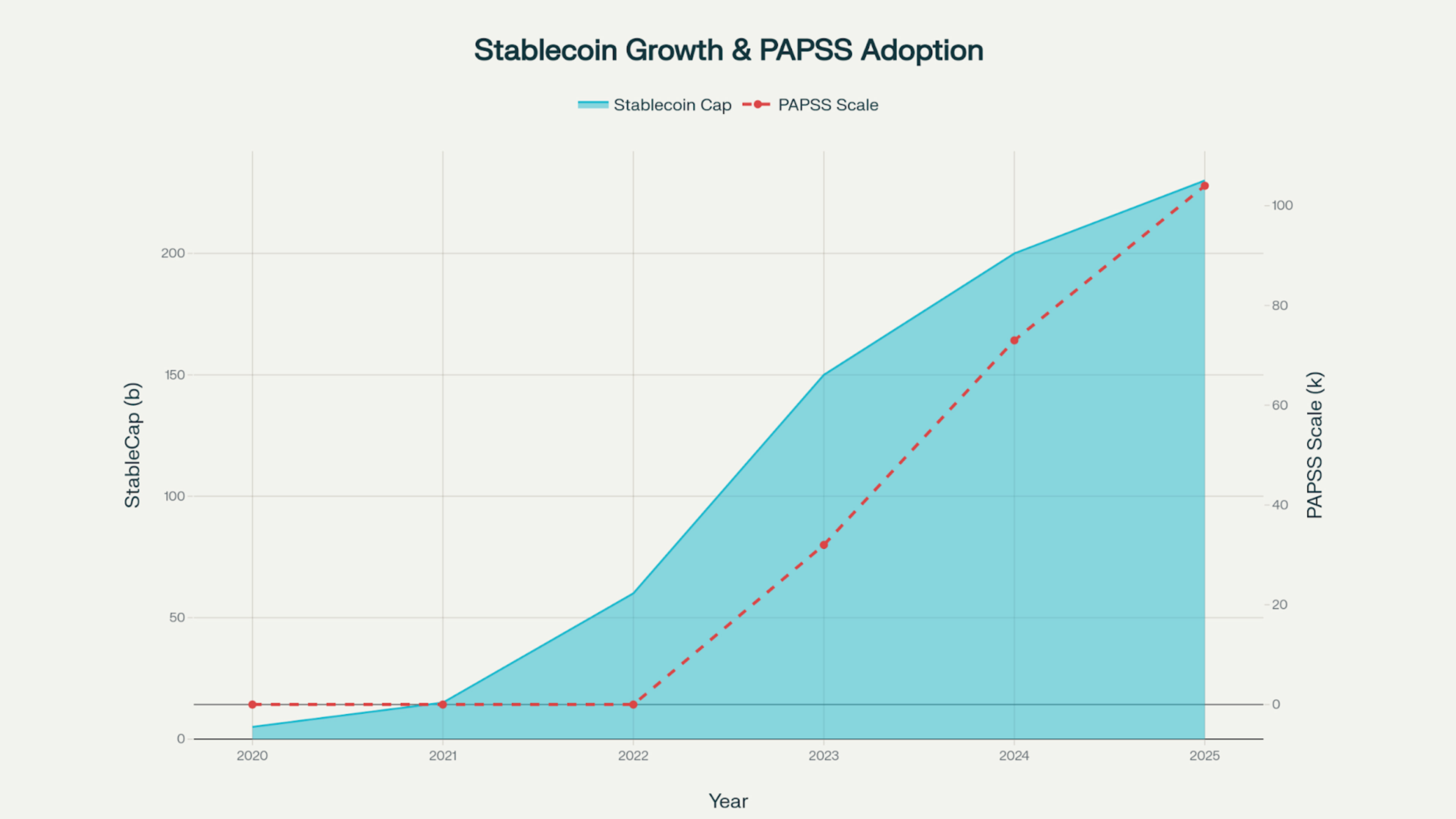
Informal FX networks facilitated via WhatsApp and stablecoins are rapidly displacing official market-making channels, especially in regions with shallow local currency liquidity. While these decentralized hubs empower SMEs and bridge systemic gaps, they undercut the effectiveness of monetary policy. Formal infrastructure solutions like PAPSS’s Africa Currency Marketplace, and regulated stablecoin systems, present a path toward scaling efficiency while potentially preserving policy control. Understanding this evolving landscape is vital for citizens, policymakers, and businesses alike.