



The Economy Is Growing — So Why Does Nobody Feel Rich?
February 18, 2026 by johneb492254456
Global GDP growth held resilient at 3.3% in 2024 according to IMF estimates, with projections for a modest slowdown to 3.2% in 2025 and a forecasted 3.1% in 2026 as trade frictions and policy uncertainties weigh in. Advanced economies expand around 1.5% while emerging markets maintain stronger momentum above 4%. Labor markets stay robust in many places, unemployment remains historically low in key regions, and investments in technology drive some sectors forward. Yet these broad positives mask a deeper reality where households feel squeezed rather than enriched.
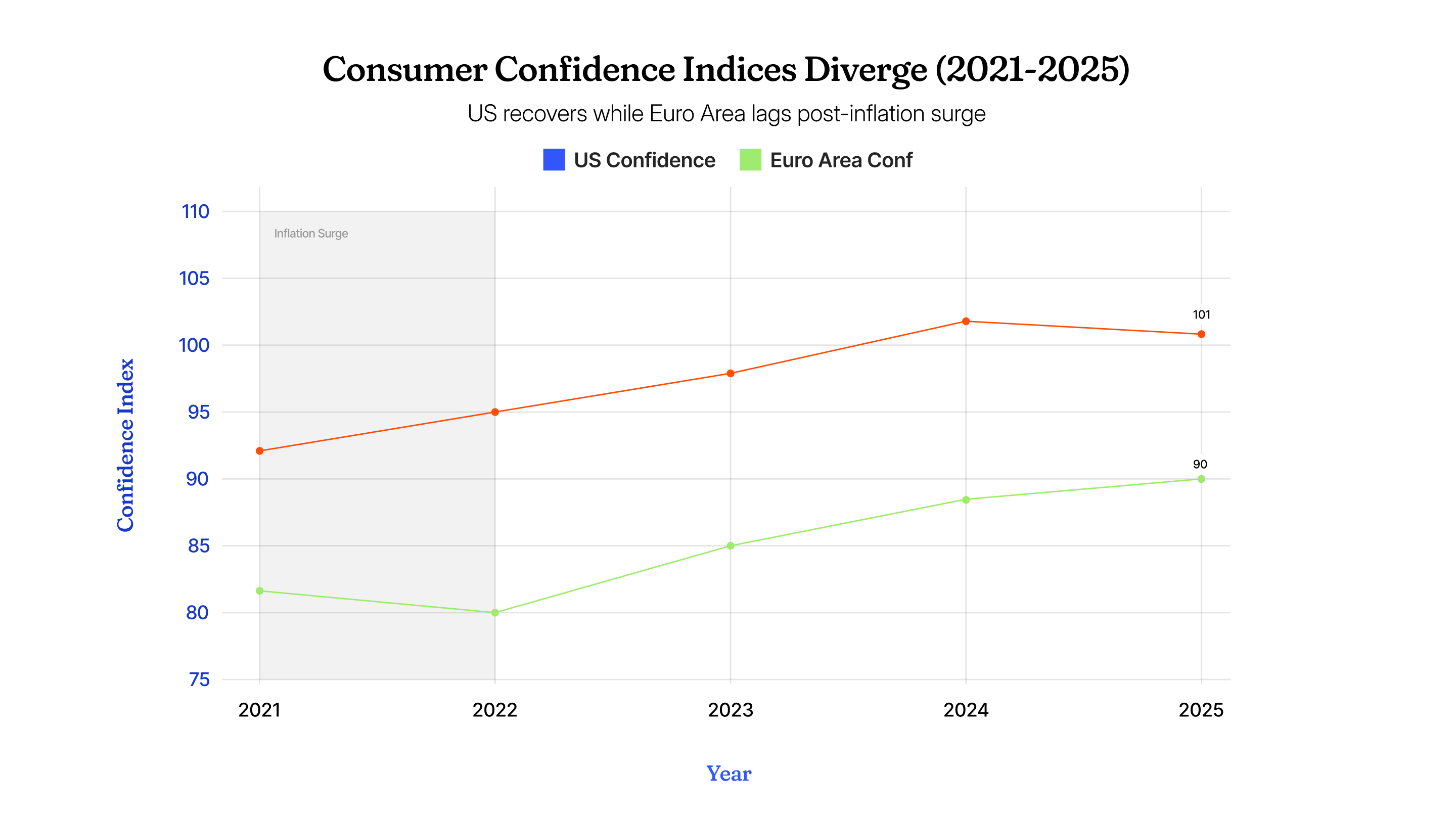
GDP captures total output but not how gains reach individuals or offset rising costs. Consumer sentiment indices diverge sharply from growth figures, with surveys showing lingering pessimism despite recovery. In major economies, confidence remains below pre-pandemic norms even as output rises, reflecting a “vibecession” where statistics improve but lived experience does not. This puzzle stems from inflation’s lasting impact and uneven benefit distribution, making macro strength feel disconnected from daily finances.
Inflation surged post-2021, pushing prices higher across essentials and creating a new cost baseline that erodes affordability. Real wages fell initially but have recovered positively in most OECD countries by 2024-2025, with annual growth around 3.4% in many cases. However, in roughly two-thirds of OECD nations, real wages remain below early 2021 levels before the major inflation wave. ILO data confirms global real wage growth strengthened in 2024, though persistent price levels mean gains feel insufficient against accumulated losses.
Headline inflation has cooled, yet prices rarely decline, leaving a “level effect” where everything costs more permanently. Higher interest rates to combat inflation increase debt burdens for mortgages, loans, and credit, reducing disposable income even with steady jobs. Households face tighter budgets as servicing costs rise, turning stable employment into constrained finances. This structural pressure contributes to why growth fails to translate into felt prosperity.
Post-pandemic expansion has leaned heavily on financial markets and capital-intensive sectors, boosting asset values disproportionately for owners. In the U.S., the top 1% held 31.7% of wealth by late 2025 per Federal Reserve data, nearing postwar highs and rivaling the bottom 90% combined. Wealth accumulation outstrips broad wage growth, as Bloomberg and World Bank analyses note, widening the perception that economic progress favors few. Wage earners see modest advances while capital gains drive headline figures.
The economy grows on paper, but true success depends on translating expansion into everyday security through better purchasing power, fairer distribution, and relief from debt pressures. As sentiment lags output, policymakers face the challenge of ensuring growth benefits households broadly rather than concentrating gains. This shift in focus from aggregate figures to lived experience defines the current cycle, reminding us that economic health is measured not just in GDP, but in whether people feel richer in their daily lives.