



The Most Dangerous Employee Today Is the One Who Doesn’t Use AI
March 18, 2026 by johneb492254456
The most dangerous employee today is the one who does not use AI, as productivity divergence emerges as the primary workplace risk in this era. While access to AI tools remains universal across organizations, the key differentiator lies in adoption and fluency, creating efficiency gaps that hinder team performance in research, coding, writing, analysis, and decision-making. This week’s StayWired presentation reveals why the biggest threat to teams and careers no longer comes from job loss alone but from the quiet gap growing between those who embrace AI and those who hesitate.
The workplace risk has changed dramatically in just the past two years. While earlier technology waves rewarded access to tools, today’s AI is available to nearly everyone through free or low-cost platforms, yet only a fraction of people weave it deeply into their daily routines. McKinsey’s 2025 global survey shows that 88 percent of organizations now use AI in at least one function, but nearly two-thirds remain stuck in pilot mode rather than scaling it across teams. Employees themselves report high familiarity, with 94 percent comfortable using generative AI, yet leaders often underestimate this readiness and move too slowly.
AI power users achieve dramatically higher outputs, with OpenAI’s enterprise report revealing a sixfold productivity gap between intensive users and others, as those handling multiple tasks like data analysis and coding save up to five times more time. McKinsey surveys show employees using generative AI for over 30% of their daily work, triple leadership estimates, underscoring underrecognized divides that amplify across teams.
Enterprises that fully lean into AI are already seeing clear, everyday wins in both productivity and broader business results. According to OpenAI’s State of Enterprise AI report, which Bloomberg highlighted as one of the most comprehensive enterprise surveys to date, users save a solid 40 to 60 minutes every working day, giving them breathing room to take on more advanced work such as deeper data analysis and sophisticated coding that previously felt out of reach. Those extra minutes quickly add up to real momentum.
Employees avoiding AI create widening team gaps, as evidenced by Gallup’s finding that workplace AI use nearly doubled to 19% by 2025, led by tech and finance sectors, yet strategy lags at 22% of organizations. IMF projections indicate 40% of global jobs face AI transformation, demanding skill shifts where half of workers lack training support by 2030. This refusal risks obsolescence, mirroring how non-spreadsheet users became bottlenecks decades ago.
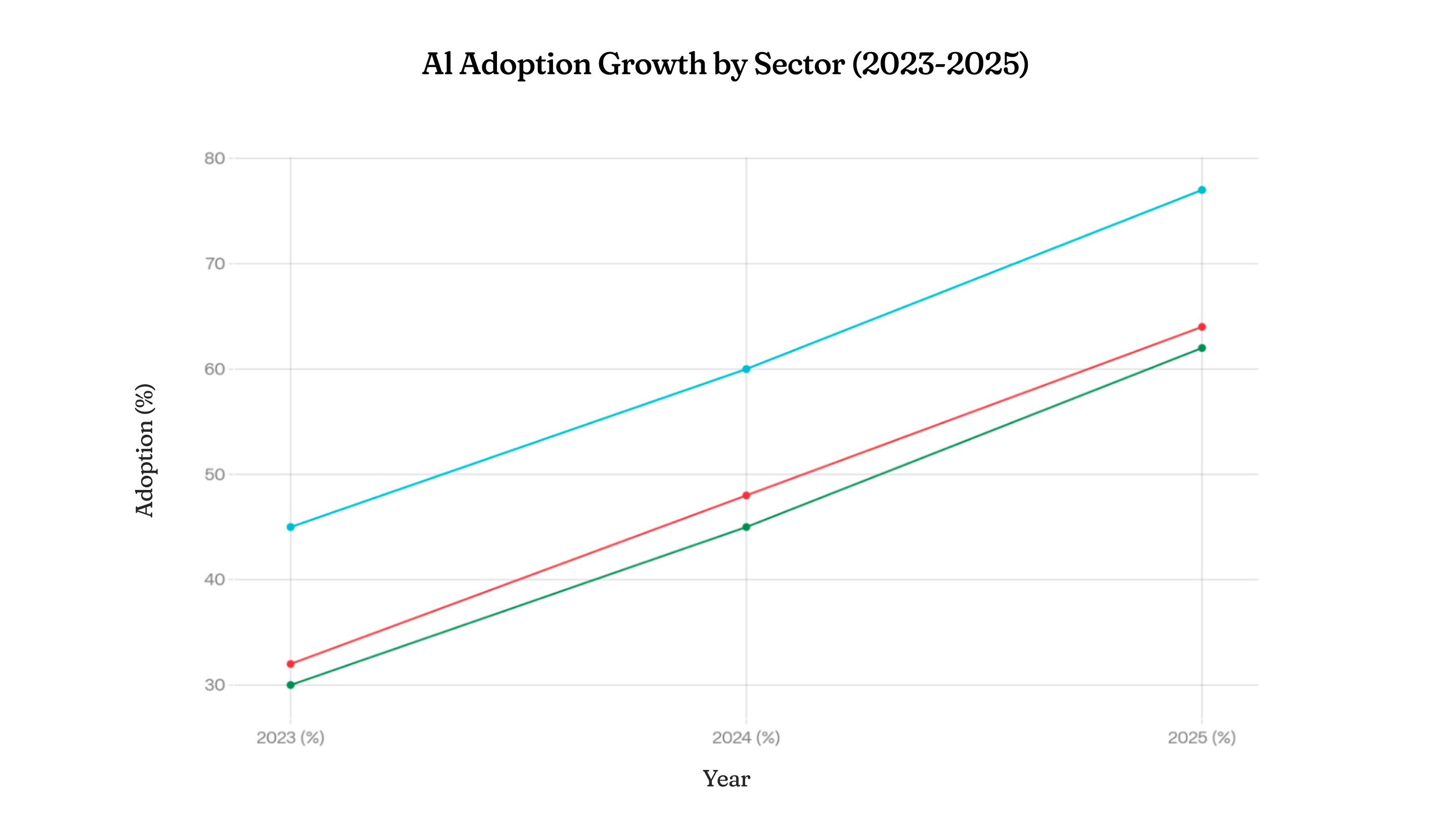 Building AI fluency starts with small, consistent habits that anyone can adopt right now. Begin by choosing one daily task, such as drafting emails, analyzing spreadsheets, or researching ideas and experiment with a reliable tool for just fifteen minutes each day. Seek out free resources and simple prompts to build confidence, as McKinsey notes that employees are far more ready than many leaders realize. Advocate for team training sessions and workflow redesigns that integrate AI safely, addressing the top concerns around privacy and accuracy highlighted in surveys. Track your own time savings and share wins with colleagues to normalize adoption and close internal gaps. Organizations that follow this path, according to the latest reports, move from experimentation to scaled value faster and avoid the productivity divergence that threatens laggards. The future belongs to teams where every member uses AI intelligently, turning potential risk into collective strength and ensuring no one gets left behind in the AI era.