



Why the Cedi’s Surge Could Change Ghana’s Fintech Playbook
June 24, 2025 by johneb492254456
Ghana’s Cedi has staged an extraordinary recovery in 2025, appreciating by 42% against the US dollar since January, trading at approximately GHS 10.20/USD by late May. This surge, a stark contrast to its 45.1% depreciation in 2022, is driven by a combination of robust macroeconomic policies and favorable global conditions. Key catalysts include a gold windfall, with prices hitting 28 record highs by April, contributing 60% of Ghana’s export receipts in Q1 2025. The IMF’s $3 billion Extended Credit Facility, coupled with stringent monetary policies like a 500-basis-point rate hike to 30%, has bolstered investor confidence. Moreso, the Bank of Ghana’s gold-backed “Goldbod” initiative, mandating 20% of gold exports be purchased in Cedis, has strengthened foreign exchange reserves, now covering over four months of imports.

The Cedi’s strength directly influences Ghana’s mobile money ecosystem, a cornerstone of its fintech sector, which serves over 50% of the population and processed transactions worth $150 billion in 2024. A stronger Cedi reduces the cost of imported technology infrastructure, such as servers and payment systems, enabling platforms like MTN Mobile Money and Vodafone Cash to lower operational costs. This cost reduction could translate into lower transaction fees, making digital payments more accessible and driving financial inclusion, particularly in rural areas where 4 million citizens are targeted for connectivity by 2026. However, the appreciating Cedi increases the relative cost of remittances for diaspora senders, potentially reducing inflow volumes, which accounted for 3.2% of GDP in 2024. Fintechs must adapt by offering competitive exchange rates or value-added services like micro-savings or insurance to retain users.
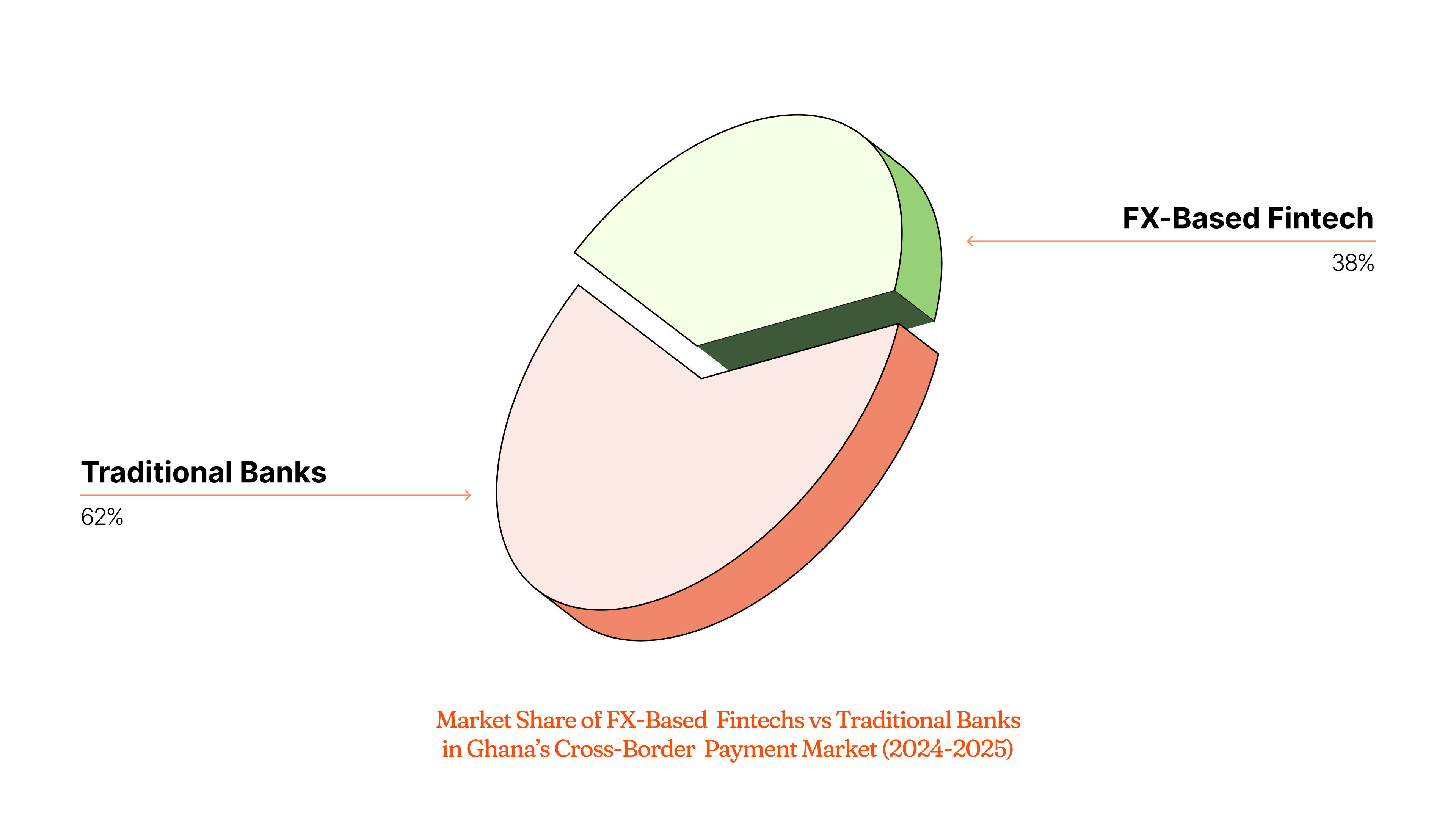
Foreign exchange-based fintechs, such as Chipper Cash and Flutterwave, face a dual-edged sword with the Cedi’s surge. On one hand, a stronger Cedi lowers the cost of cross-border transactions for Ghanaian users, making FX fintechs more competitive against traditional banks. For instance, importing goods or services priced in USD becomes cheaper, encouraging businesses to adopt fintech solutions for international payments. On the other hand, the appreciating Cedi reduces profit margins for fintechs that thrive on currency volatility, as weaker exchange rate fluctuations limit arbitrage opportunities. To counter this, FX fintechs can leverage Ghana’s improved credit rating (S&P Global’s CCC+ in May 2025) to attract international partnerships, offering hedging tools or multi-currency wallets to mitigate risks for businesses.
The Cedi’s surge enhances Ghana’s appeal to international investors, particularly in fintech, where the International Finance Corporation (IFC) committed $422 million in FY24. A stable and appreciating currency signals reduced risk, encouraging foreign direct investment (FDI) in sectors like digital payments and blockchain. The Ghana Stock Exchange’s strong performance, with increased market capitalization in IT and finance sectors, reflects this confidence. For investors, Cedi-denominated assets, such as government bonds, offer attractive yields, further supported by fiscal discipline and IMF-backed reforms.

The Cedi’s appreciation necessitates a recalibration of pricing and scaling strategies for fintechs. Lower import costs enable platforms to reduce service fees, potentially increasing user adoption but squeezing margins. To scale, fintechs should invest in localized solutions, such as integrating with Ghana’s centralized public-sector payment platform, Ghana.gov.gh, to tap into government-driven digitalization. Exporters, facing higher costs due to a stronger Cedi, may demand fintechs offer hedging or trade finance tools to maintain competitiveness. Moreso, the appreciating Cedi enhances the purchasing power of Ghanaian consumers, creating opportunities for fintechs to introduce premium services like investment apps or digital lending tailored to MSMEs.
The Cedi’s 42% surge in 2025 marks a pivotal moment for Ghana’s fintech sector, offering opportunities to lower costs, attract investment, and drive innovation. Mobile money platforms can leverage reduced operational costs to enhance financial inclusion, while FX-based fintechs must innovate to maintain profitability in a low-volatility environment. International investors, buoyed by Ghana’s improved fiscal health, are likely to increase FDI, but sustained growth requires addressing risks like commodity price fluctuations and import reliance. Policymakers should prioritize export diversification and fiscal discipline to ensure the Cedi’s stability, while fintechs must align with Ghana’s digital agenda to scale effectively. The outlook is cautiously optimistic, with GITFiC projecting a 28.94% annual Cedi appreciation in 2025, provided reforms continue. Ghana’s fintech playbook is being rewritten—those who adapt will shape its future.