



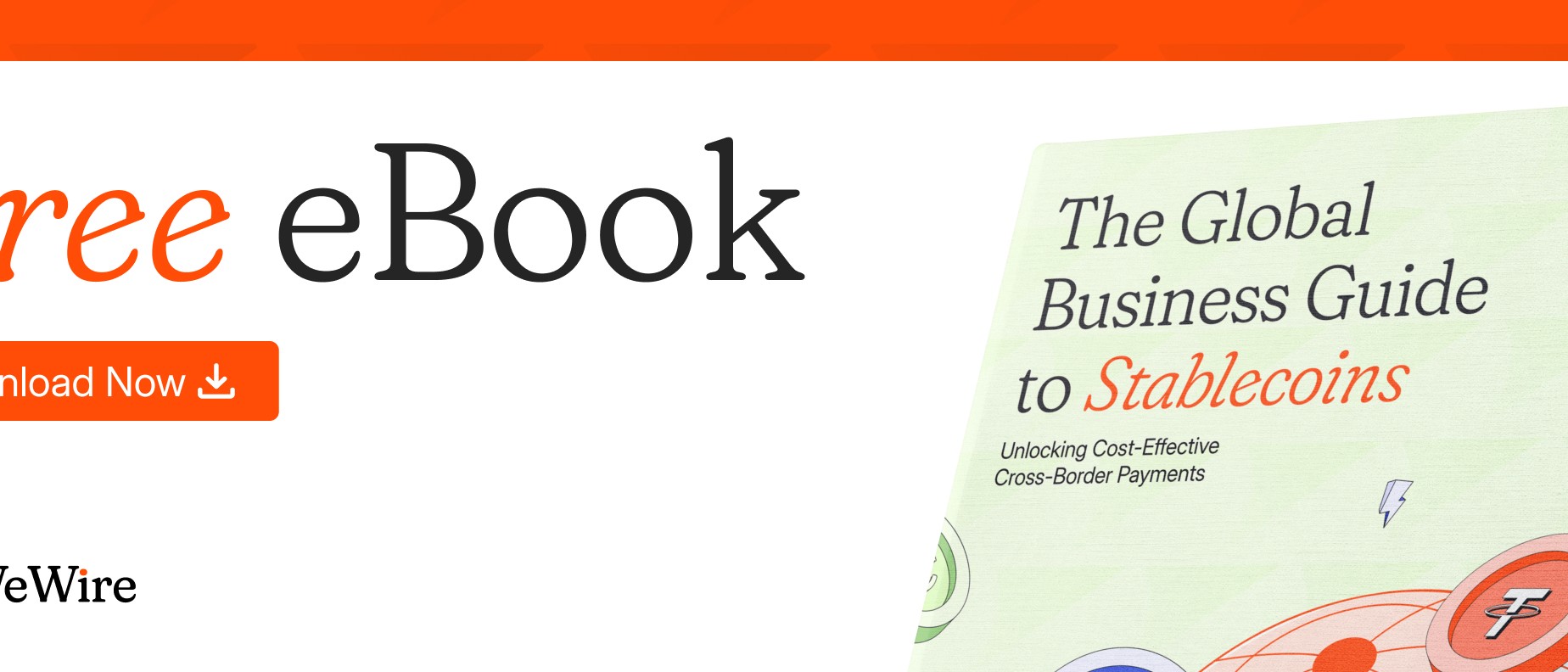
The Business Guide to Stablecoins – Unlocking Cost-Effective Cross-Border Payments
September 24, 2025 by diadem445c3650ff
Global trade is booming, but the financial rails powering it often feel stuck in the past. For many small and medium-sized enterprises (SMEs), the reality of moving money across borders means high fees, days-long settlement times, and unpredictable exchange rates. That’s where stablecoins are stepping in to rewrite the rules of international commerce.
This latest eBook from WeWire “The Business Guide to Stablecoins – Unlocking Cost-Effective Cross-Border Payments” reveals how this new wave of digital money is helping exporters, importers, and SMEs streamline transactions, cut costs, and expand globally without the traditional banking bottlenecks.
Why Stablecoins Matter for Businesses
Unlike volatile cryptocurrencies, stablecoins are pegged to fiat currencies like the US dollar, offering the best of both worlds—blockchain speed and transparency, with fiat stability. For businesses, this means:
- Lower transaction costs – save up to 80% compared to SWIFT and bank wires.
- Instant settlements – payments clear in minutes, not days.
- Reduced FX risk – peg stability simplifies budgeting for contracts and trade.
- Global reach – easy access to suppliers, partners, and customers worldwide, even in underbanked markets.
Real-World Impact: From Exporters to Freelancers
The eBook highlights compelling case studies where stablecoins transformed payments:
- A food distributor in Cyprus now pays suppliers in West Africa instantly with stablecoin business payments, avoiding heavy FX markups.
- An export-import firm cut cross-border SME payments costs by 40% after replacing SWIFT with USDC rails.
- Freelancers in Africa and Asia now receive crypto payments for exporters/importers in minutes instead of waiting 3–5 days.
These aren’t future projections—they’re happening now.
The Regulatory Landscape
Far from being a gray area, stablecoins are now gaining regulatory clarity. Frameworks like the EU’s MiCA and the U.S. GENIUS Act are setting standards for full reserve backing, audits, and compliance. This ensures businesses can transact with confidence while meeting AML/KYC requirements.
How SMEs Can Get Started
The guide walks businesses through practical steps:
- Assess payment pain points (fees, delays, FX risk).
- Choose a trusted stablecoin (USDT, USDC) and blockchain (Ethereum, Tron, Solana).
- Integrate with platforms like WeWire, which enable stablecoin payments, multi-currency wallets, and seamless conversions into local currencies.
The Bottom Line
For SMEs, exporters, and importers, stablecoins are more than just a trend—they’re a competitive advantage. Whether paying overseas suppliers, managing treasury operations, or receiving cross-border revenue, stablecoins offer speed, transparency, and savings that traditional systems simply can’t match.
If your business depends on global trade, the time to explore stablecoin business payments is now.
Download the full eBook: The Business Guide to Stablecoins – Unlocking Cost-Effective Cross-Border Payments and learn how to future-proof your cross-border operations.