



Dollars or Death: Why African SMEs Are Addicted to a Currency They Don’t Print
July 14, 2025 by johneb492254456

African Small and Medium Enterprises (SMEs) form the backbone of the continent’s economy, driving job creation, innovation, and economic growth. However, these businesses face a critical challenge: an overreliance on the US dollar, a currency they neither print nor control. This dependency has become a matter of survival, as the US dollar is essential for importing goods, servicing debts, and conducting international trade. With approximately 70% of African countries experiencing foreign exchange (FX) shortages, SMEs struggle to secure the dollars needed to import essential goods, threatening their operations and growth. The real import crisis is not just about cargo—it’s about currency. This week’s StayWired presentation explores why African SMEs are so dependent on the US dollar and investigates whether alternative currencies, such as stablecoins or trade tokens, can provide a viable solution to this pressing issue.
The US dollar’s dominance in the global economy profoundly impacts African economies. As the world’s primary reserve currency, it accounts for over 50% of low and middle-income countries’ sovereign debt, including many African nations. In Africa, the dollar is indispensable for international trade, with most commodities priced in dollars and the majority of imports paid for in dollars. Countries like Nigeria, Ghana, and Zambia rely heavily on dollar-denominated transactions to import essential goods such as machinery, raw materials, and food. However, this dependency has significant drawbacks. A rising US dollar increases the cost of servicing dollar-denominated debt, as evidenced by Nigeria’s expenditure of $3.5 billion on foreign debt servicing in the first nine months of 2024.
 Moreso, the dollar’s strength fuels inflation in African economies by raising import costs, with Nigeria experiencing 32.7% inflation in September 2024. Global events, such as the COVID-19 pandemic and geopolitical conflicts, have further disrupted exports and worsened terms of trade, amplifying the dollar’s impact. Historically, the dollar’s role as the world’s reserve currency, established post-World War II through the Bretton Woods system, has entrenched its influence in African trade and finance.
African SMEs operate in a challenging environment, with limited access to finance and foreign exchange posing significant hurdles. Only one-third to one-fifth of SMEs in Sub-Saharan Africa have access to financial instruments like bank loans, and approximately 28.3% are entirely credit-limited, restricting their ability to grow or sustain operations. The scarcity of US dollars exacerbates these challenges, as SMEs require dollars to import critical goods such as raw materials and machinery. For example, Nigerian SMEs face significant obstacles in accessing dollars, with the country’s total debt surpassing $100 billion, straining foreign exchange reserves. The rising dollar increases import costs, eroding profit margins and hindering growth.
 Moreover, SMEs often resort to informal or alternative channels to access dollars, which carry higher risks and costs. This dependency on the dollar exposes SMEs to currency market volatility, where sudden fluctuations can devastate their businesses, making it difficult to plan or invest in the future.
The import crisis in Africa is fundamentally a currency crisis. With 70% of African countries facing FX shortages, SMEs struggle to secure the dollars needed to pay for imports, leading to supply chain disruptions and increased costs. Countries like Nigeria, Ghana, and Zambia have experienced severe dollar shortages, which have impaired their ability to import essential goods. For instance, Nigeria’s naira has weakened significantly, making imports more expensive and reducing the competitiveness of local businesses.
 This crisis has broader economic implications: inflation rises as import costs increase, and economic growth slows as SMEs scale back operations or shut down entirely. Global events, such as the COVID-19 pandemic, which reduced export earnings, and geopolitical conflicts, which have driven up commodity prices, have intensified these challenges. For SMEs, which lack the financial buffers of larger corporations, the inability to access dollars can be catastrophic, threatening their survival in an increasingly globalized economy.
Stablecoins, such as USDT (Tether) and USDC (USD Coin), are emerging as a promising solution to Africa’s FX shortages and currency volatility. These digital currencies, pegged to the US dollar, provide a stable medium of exchange that is not subject to the volatility of local currencies. In Africa, stablecoins are gaining traction for cross-border payments and trade. In Nigeria, stablecoins account for a significant portion of crypto transaction volumes, with USDT representing around 5% of the total trading volume on platforms like Paxful. Ethiopia saw a 180% year-over-year growth in stablecoin transfers in 2024, following the devaluation of its currency, the birr, by 30%. Stablecoins enable SMEs to hedge against local currency devaluation, store value, and conduct international trade without relying on traditional banking systems.
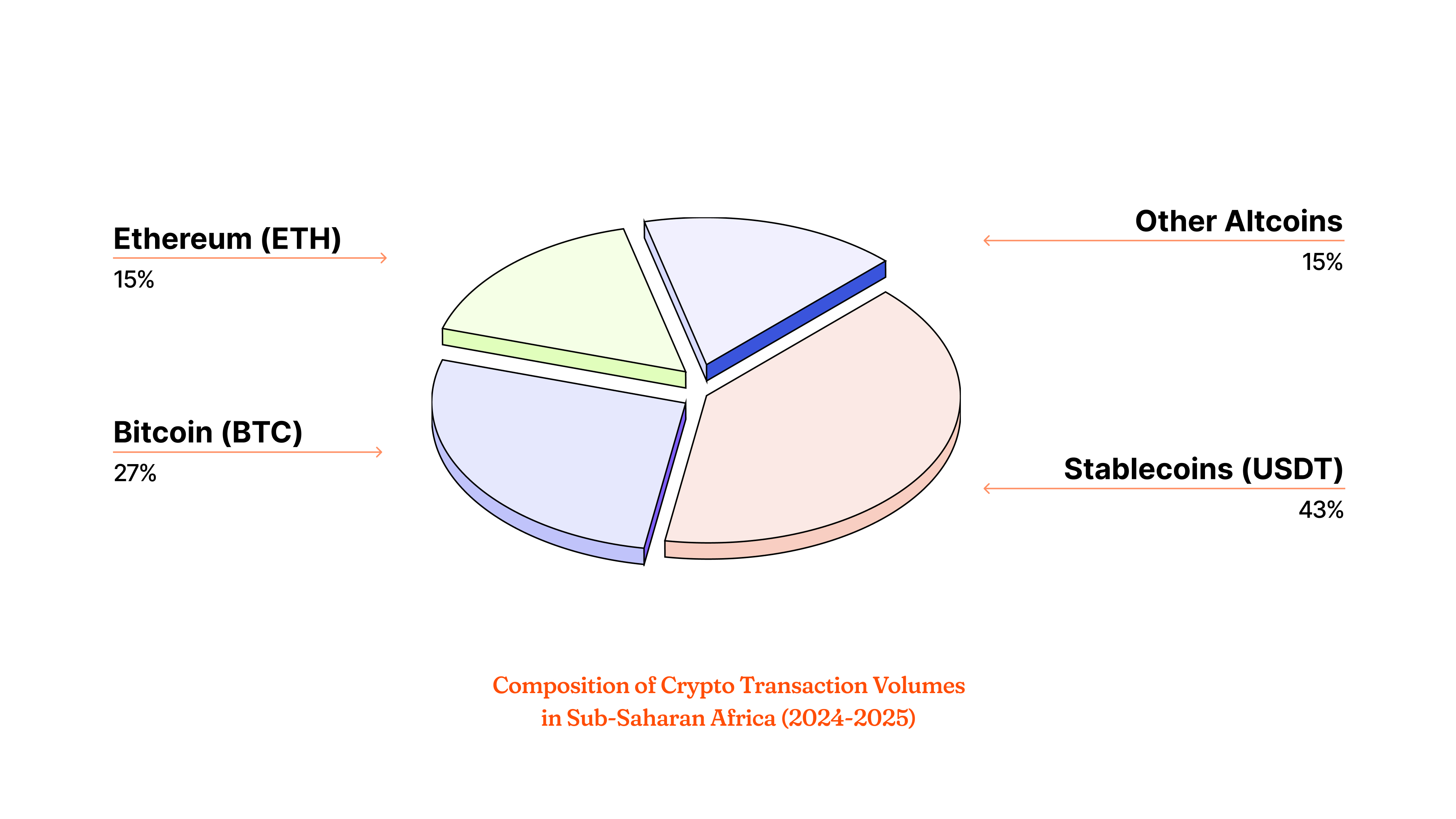 They also offer significant cost savings, with transaction fees as low as 0.1% compared to the 8.3% average cost for sending $200 to Sub-Saharan Africa via traditional remittance channels, according to the World Bank. However, challenges such as regulatory uncertainties and the need for greater financial literacy among SMEs must be addressed to ensure widespread adoption.
Stablecoins are already transforming the operations of African SMEs. In Nigeria, small merchants are increasingly using stablecoins like USDT and USDC for business-to-business (B2B) payments with exporters, particularly from Asia. For example, Nigerian SMEs use peer-to-peer transfer options to pay Chinese suppliers, bypassing the need to travel with cash or navigate restrictive banking systems. This shift was spurred by the Nigerian government’s restrictions on dollar transfers, which have pushed businesses toward alternative solutions. However, regulatory challenges persist. South Africa’s Financial Sector Conduct Authority (FSCA) has classified crypto assets as financial products, indicating a move toward greater oversight, but many African countries still lack clear regulatory frameworks for stablecoins. Despite these hurdles, the growing adoption of stablecoins underscores their potential to address Africa’s FX challenges and support SME growth.
The dependency of African SMEs on the US dollar is a double-edged sword: it is essential for participating in global trade, yet it exposes them to the risks of currency volatility and FX shortages. The import crisis highlights the urgent need for alternative solutions, and stablecoins have emerged as a viable option. With Africa leading the world in stablecoin adoption—particularly in countries like Nigeria and South Africa—these digital currencies could play a transformative role in the continent’s economic future. Stablecoins offer SMEs a stable, accessible, and cost-effective way to conduct cross-border payments, hedge against local currency devaluation, and participate in global trade. However, for stablecoins to reach their full potential, African regulators must establish clear frameworks to ensure their safe and legal use. As the global economy moves toward digitalization, African SMEs may find that stablecoins are not just a temporary solution but a cornerstone of their long-term growth strategy. The question remains: will Africa’s financial future be defined by dollars or by digital innovation?