




Why Global Capital Is Favouring High-Yield Emerging Markets Despite Rising Risks
June 16, 2026 by johneb492254456 Global investors have poured money into high-yield emerging-market (EM) assets even as geopolitical and inflation risks rise. Bond yields in countries like Brazil, Mexico, South Africa and Indonesia remain in double digits, attracting carry-seeking flows despite market volatility. These inflows have been concentrated in local-currency debt, where real interest rates are high and policy frameworks are credible. From January through May 2026, EM portfolios saw net positive flows (driven by bonds) even after a brief equity selloff in March–May (IIF data). Global investors cite attractive carry, undervalued currencies, and policy resilience in many EMs as key drivers, while evolving currency and liquidity risks are the main caveats. The thesis of this analysis is that investors are currently prioritizing yield and carry over conventional risk measures, betting that EM governments’ strong policy credibility and commodity export windfalls will outperform any short-term shocks. Emerging-market bond funds have attracted sizable net inflows in 2026. According to the Institute of International Finance (IIF), net foreign investment in EM debt was +$14.3 bn in February (and even higher in January and April), even as equities saw muted or negative flows. In contrast, May saw a reversal in equity inflows, but EM debt continued to draw capital. IIF data show that higher-yielding markets outside China were the main beneficiaries (Latin America +$4.3 bn, Asia ex-China +$5.9 bn in Feb). At the same time, sovereign bond yields in many EMs remain extraordinarily high. For example, Brazil’s 10-year local-currency yield hovers around, and South Africa and Mexico are around 9–11%, and Indonesia/India in the 6–8% range. These yields translate into strong real returns given moderate inflation, attracting “carry-trade” investment. As SSGA notes, EM countries are entering H2 2026 with “more supportive… orthodox policy settings, healthier real yields, and comparatively better inflation dynamics” than many developed markets. In practical terms, central banks in Brazil, Colombia, and others have kept high interest rates or tightened further into 2026, underpinning local-currency bond yields. Investors also note currency trends. The US dollar strengthened late in Q1, which weighed on many EM currencies, but most high-yield EM FX were either stable or undervalued before the recent bounce. A related heatmap of regional flows (Chart 3) would highlight Asia ex-Japan and Latin America as winners in early 2026, while Europe/MENA saw less. For example, Feb 2026 saw EM Asia (ex-China) +$5.9 bn in debt inflows and LatAm +$4.3 bn, whereas Europe only +$2.6 bn. This regional pattern largely reflects yield opportunities: many Latin and Asian EM central banks kept rates high, whereas a few others cut in early 2026 (e.g. India, Thailand). Carry and carry-trade dynamics. With global developed-market rates hitting a “trough” (the Fed’s 3.5% policy rate and similar in Europe), EM yields look very attractive by comparison. Many EM currencies still offer a positive forward carry against the dollar. Moreover, the high-inflation run of 2021–22 has receded, so real EM rates are unusually high. As SSGA puts it: “investors are being paid higher real yields (versus developed-market sovereigns) [and] currencies appear undervalued versus the dollar. When the US dollar eased early in 2026, that added to local-debt returns, reinforcing the carry trade. In short, a cheap dollar + high EM yields = a strong incentive to chase EM carry. Crucially, EM central banks largely avoided policy slippage. Some EM policymakers have either kept rates high or even tightened in Q1–Q2 2026 (e.g. Brazil, Colombia, Philippines). This contrasts with some advanced economies where inflation remains stubborn, necessitating higher long-term yields. The result is that inflation-adjusted income in EM is superior. SSGA notes that EM “offer higher carry and better inflation-adjusted income” than many developed peers. IIF’s Fortun emphasizes that flows are “differentiated, with … policy credibility, and market depth playing a growing role” in allocations. In practice, this means that capital tends to avoid EMs with weak policies (e.g. Turkey’s unorthodox cuts, or fiscally troubled Nigeria) and flock to those with disciplined central banks and shrinking inflation trends (e.g. Mexico, Chile, India). Non-resident access to local-currency bonds has improved in many EMs, expanding investable supply. For example, pension reforms in Brazil and new bond issuance in China have attracted foreign holdings. The BIS and IMF have documented that EM bond markets have deepened, making carry trades more stable. As a result, even modest global volatility can be absorbed by steady buyers of yield. In February 2026, a Reuters report noted that “foreign investors remain interested in higher-yielding markets outside China, even as conditions become less predictable”. Many of the top high-yield EMs are commodity exporters (e.g. Brazil, Mexico, Indonesia). The post-March oil spike improved their terms of trade and fiscal balances, unlike in 2020–22. A favorable commodity cycle provides extra income to pay bond coupons, reducing default worries. The earlier State Street report confirms that “oil-exporting and commodity-linked economies proved relatively more resilient” during Middle East tensions. Thus, even when supply-chain fears lurk, these EMs gain a partial hedge from resource revenues. The tech-driven “risk-on” wave (AI boom) has ironically helped certain EMs too: South Korea and Taiwan (technically, EM categorization is debatable) saw strong inflows in early 2026. At the same time, some investors view high-yield EM bonds as one of the few places to hunt for returns amid flat Treasury yields. As Reuters notes, “High yield debt can deliver positive outcomes” if developed bond markets stagnate. Finally, pensions, sovereign wealth funds, and even some retail investors in EMs themselves have been allocating more to local bonds, further boosting domestic demand. Despite the inflows, investors remain aware of the dangers. Geopolitical volatility (Middle East war, US-China tensions) could spill into EM markets, especially for oil-importers. A sudden spike in oil or food prices would strain EM consumer prices and current accounts. Second, currency risk looms: if the dollar unexpectedly rallies (e.g. on safe-haven flows), many EM FX could snap back, eroding the carry. The BIS notes that currency depreciation can offset EM yield advantages, and inflation may surprise on the upside. The market is also concerned about liquidity risk in case of a sudden selloff. The GFSR and BIS warn that carry trades could unwind and trigger currency swings if volatility spikes. However, current “real yields” support carrying positions, and central banks have ample reserves. Even so, the IIF cautions that the threshold for EM investment has risen as US policy tightens and oil prices stay high. Some EM countries with fiscal strains (e.g. Sri Lanka, Ghana) could see spreads widen. Finally, flow volatility itself is a risk: the extreme swings in monthly IIF data (from +$70bn in April to –$26bn in May) illustrate how sentiment-driven these flows remain. A broad-based rush to the exit could hit even “safe” EMs by technical effects. Nonetheless, as long as US real rates hold near 2% and EM rates near 10%, the carry incentive is strong. Investors in EM high-yield include sovereign wealth funds, pension funds, mutual funds, and more recently retail through local bond ETFs. Debt funds outpaced equity funds in attracting capital this year. Offshore buy-side flows (via funds) are big, but domestic banks and insurers also roll over these yields. For EM governments, the lesson is clear: maintain policy credibility. High real rates can finance deficits cheaply, but only if investors trust inflation will stay low. Countries that had clear inflation-fighting records (e.g. Chile, Peru) benefited. Others may be tempted to cut rates to spur growth; they must weigh the hit to inflows. For global investors, the imperative is diversification. EMs are not a monolith: inflows have been very selective. Data show a new divide between “reformers” (with lower spreads) and “serial borrowers” (higher risk). Investors should stress-test carry positions for FX shocks and monitor elections/tariffs. In practice, many top bond managers now overlay EM exposure with currency hedges or stop-loss rules. The relative outperformance of EM debt underscores that yield matters even when growth is uncertain. In summary, global capital flows are rewarding high-yield EMs for sound policy and carry, even amid broader risk-on/ risk-off swings. The “income cushion” from high real yields and credit margins allows these markets to weather current headwinds. However, investors remain vigilant for any sign that inflation or politics might undo the attractiveness of these higher yields.
johneb492254456

INTRODUCTION
Capital Inflows, Yields, and FX Trends
Why High Yields Trump Rising Risks
Policy credibility and inflation.
Structural factors – development of local debt markets.
Commodity and fiscal buffers.
Global risk sentiment and alternative assets.
Risks: Why the Calm May Fray
Liquidity and contagion.
Investor Base and Implications
Actionable Takeaways


Why the Real Stablecoin Opportunity Is Infrastructure, Not the Coins Themselves
June 9, 2026 by johneb492254456 Stablecoins have exploded into a $300 billion market, with annual transaction volumes in the tens of trillions of dollars. But the real opportunity lies not in the coins themselves, but in the modernized infrastructure they bring – new payment rails, tokenized deposits, custody platforms, and programmable settlement layers. Banks and fintechs now compete to build this digital money plumbing, and savvy policymakers are racing to regulate the rails (not just the tokens) to capture efficiency gains while safeguarding stability. This analysis examines the definition and scale of stablecoins, the distinction between token issuance and payment rails, current regulation (US, EU, UK, Africa), use cases, risks, business models, and policy steps, especially for African markets. Stablecoins are crypto-assets pegged to fiat (mostly the US dollar) and backed by collateral. Today, hundreds exist, but a few (Tether USDT, Circle USDC) dominate the $300 billion total market cap. Outstanding USD-backed stablecoins were about $280 billion at end-2025. Growth has been explosive: markets jumped from under $50 billion in 2020 to $300 billion by 2026. Reported on-chain transaction volumes are vast (Chainalysis estimates ~$28 trillion of “real” payments in 2025 alone, though raw figures (Visa’s 2025 data: $34 trillion) include high-frequency trading. Beyond issuing tokens, stablecoins spotlight the underlying infrastructure – blockchains, payment rails, custody systems and on-chain protocols – that make 24/7 global transfers possible. Unlike legacy rails (correspondent networks and batch clearing), stablecoins settle in seconds on public chains, 24/7, across borders with minimal friction. This reduces overhead: no nightly reconciliations or multiple intermediaries, and finality is almost instant. As Chainalysis notes, “unlike legacy payment rails…stablecoins operate 24/7 and move across borders without correspondent banking friction”. These rails can be interoperable with traditional finance: for example, major stablecoin issuers (Circle) run on dozens of chains, and JPMorgan has issued a “deposit token” on a public blockchain (Base) to move money for institutional clients. Similarly, tokenized bank deposits – digital representations of bank accounts on ledgers – are emerging. These are backed by banks’ capital, deposit insurance, and Fed access, making them very safe. JP Morgan’s JPM Coin and BNY Mellon’s private blockchain for settlement are examples. The Brookings analysis points out that tokenized deposits will operate in closed, permissioned networks (issued and redeemed by banks), whereas payment stablecoins operate on open public chains. Banks also pursue hybrid models: large banks are building tokenized deposit tokens (digital dollars on-chain) and fintechs are issuing stablecoin rails. This competing infrastructure battle suggests the real value isn’t the token’s brand, but the network it runs on (see Table below). Table 1 (suggested): Comparison of stablecoin & tokenized deposit infrastructure providers and their attributes. Stablecoin rails unlock many use cases beyond crypto trading. The most mature is cross-border payments and remittances, especially where banking is slow or costly. In Africa, remittances and trade payments are already being made via USD stablecoins, as illustrated by a recent survey: 99% of a large African fintech’s $6 billion in cross-border volume utilized USD tokens. Merchants, diaspora workers, and B2B traders prefer US-pegged digital dollars for speed and certainty, particularly when SWIFT or foreign exchange markets are opaque. (See suggested Figure 4: global map of stablecoin usage intensity, highlighting Africa, LATAM, and markets with currency volatility). Other emerging applications: tokenized treasuries and liquidity. Corporations and fund managers can park cash in tokenized USD instruments that settle instantly across chains. In theory, automated “machine-to-machine” commerce (IoT payments) could utilize stablecoins as on-chain value buckets. Major payment players (Visa, Stripe, Mastercard) are integrating stablecoins and related rails (e.g. Mastercard’s BVNK partnership) into their infrastructure, signaling that stablecoin rails are becoming core payment utilities. In short, every instance where money moves – remittances, trade finance, treasury management – can exploit stablecoin “plumbing”. Regulators worldwide are scrambling to frame these developments. In the US, the 2025 “GENIUS” Act (H.R.4763) officially defines payment stablecoins and mandates federal rules. Under GENIUS, nonbank issuers can obtain chartered licenses but must hold 100% high-quality reserves and meet stringent AML/CFT requirements. Pending rules (due 2026–2027) will decide details (reserve compositions, interest restrictions, etc.). The Fed has even proposed limited Fed accounts for payment firms to level the field. Brookings notes banks (community and regional) fear stablecoins drawing deposit funding, which is one reason lawmakers initially barred issuer interest payouts. In Europe, the MiCA framework (2023) and upcoming e-money token rules put stablecoins under financial supervision (approved issuers, trust accounts, redemption promises). The UK plans similar e-money stablecoin rules by the end of 2026. Notably, US GENIUS and UK/EU rules differ in details (e.g. reserve location, passporting), raising cross-border frictions. For global transactions, lack of harmonization means an American stablecoin issuer needs U.S. regulatory approval and must prove “equivalency” to operate in, say, the UK or EU. Africa has no single framework yet. Some central banks (Nigeria, South Africa) have warned about crypto and are exploring regulations. A recent survey of African regulators emphasized the urgent need to distinguish stablecoin usage vs issuance. The consensus from fintech roundtables is that mature regions must “build passporting” from the start: licenses in one African country should be recognized by others. For example, a local stablecoin pegged to the Naira and backed in-country could help channel diaspora savings into domestic bonds, but only if cross-border capital rules are clear. In general, experts recommend regulating activity (payments, money transmission) rather than banning tokens – otherwise consumers turn to informal markets and face fraud. Stablecoin rails bring innovation but also risks. Liquidity and reserve transparency are perennial concerns. Unlike bank deposits, most stablecoins are fully backed by assets, but the quality (T-bills, commercial paper, other crypto) varies by issuer. A key failure (like TerraUSD’s crash in 2022) reminds that algorithmic coins without real collateral are extremely fragile (and mostly excluded from serious regulation). Even collateralized coins carry risk: operators might invest reserves in illiquid assets, or suffer run risk if many users redeem at once. Regulators address this by requiring daily audits and high-grade reserves. Unlike deposit tokens (insured and Fed-backed), stablecoins usually lack guarantors – but regulated issuers must now meet capital and liquidity rules near bank standards. Operational and compliance risk is another issue. Open stablecoin networks can be used anonymously, raising AML/CFT concerns. Under GENIUS, issuers are “financial institutions” under U.S. BSA laws, and EU/UK rules similarly force KYC/AML controls. Brookings suggests a global registry of “whitelisted” counterparties to tame this problem. Interoperability is limited today: converting from one stablecoin to another or to bank deposits still requires exchanges or bridges (with their own risks). Institutions must manage smart-contract vulnerabilities, and stablecoin networks must adopt dispute-reversal and fraud-proofing mechanisms (unfamiliar to pure blockchain purists). Concentration risk also looms. Tether and Circle together control ~85% of the market. If either failed, some rails could seize up. On the other hand, diversity (several major stablecoins, various blockchains) means innovation isn’t dependent on a single company – unlike legacy rails centralized in a few banks. Still, fragmentation can mean multiple pegs: one USDC might not trade evenly for another on different chains. Solutions include common stablecoin pools, stronger on-chain liquidity protocols, or central bank digital currencies (CBDCs) to serve as an ultimate settlement asset. For banks and fintechs, stablecoin infrastructure is a gold rush. Business models vary: African regulators should treat stablecoin infrastructure as potential financial plumbing, not just a “crypto fad”. Key steps: Stablecoins are not a panacea – but as one African fintech CEO put it, “the challenge is not demand, but doing it responsibly.” By focusing on infrastructure (rails, custody, compliance), not just the coins, African regulators and banks can harness this innovation to shrink payment costs, improve FX access, and integrate markets – while mitigating the currency and financial stability risks.
johneb492254456

Introduction
Stablecoins: Definition, Scale, and Growth
Chart 1 (below) show stablecoin supply and monthly volumes 2019–2026, illustrating rapid uptake in crypto-rich markets and growing use in cross-border flows.Infrastructure vs Coins: New Rails and Tokenization
Provider Type
Network Type
Examples
Attributes
Public blockchains (crypto rails)
Open, permissionless networks (Ethereum, Stellar, etc.)
Circle USDC, Tether USDT on Ethereum/Tron/Algorand; Stellar USD-backed tokens
Open access (ANY user); fast settlement; global reach; custody via exchanges or wallets; requires crypto on/off ramps; KYC often limited to on/off ramps.
Tokenized bank networks
Closed, permissioned ledgers
JPM Coin on Base (Ethereum L2); BNY Mellon network; upcoming consortia (e.g. FedNow interbank initiatives)
Permissioned access (only approved banks/clients); settlement on closed networks; RBI/Fed deposit-backed; can use existing banking rails; KYC/AML at issuance guaranteed.
Fintech stablecoin platforms
Hybrid networks (permissioned issuance on public chains)
PayPal’s PYUSD; Circle/Binance/Paxos
Licensed entities issue tokens on public chains; combine bank-grade reserves with crypto rails; KYC at onboarding; can reach bank and crypto users; provide on/off ramps.
Non-bank blockchain rails
Decentralized blockchains with built-in tokens
Stellar USD (Stably); Ripple USD; Central Bank Digital Currency (projected)
Programmable networks; may not be fully liquid; emphasize speed/cost; regulatory status evolving; direct peer-to-peer transfers.
Key Use Cases: Cross-Border and Beyond
Regulatory Landscape: US, EU, UK, Africa
Risks and Mitigants
Commercial Opportunity and Business Models
Big banks see stablecoins as a new service line: JPMorgan’s token can settle its FX trades on-chain, and banks plan tokenized deposit networks to improve interbank liquidity. Fintechs and crypto firms are vying to build or own the rails (for example, Circle’s multi-chain DC system or PayPal’s PYUSD).Policy Recommendations for Africa
The Modern Economy Runs on People Pretending They’re Financially Fine
May 27, 2026 by johneb492254456 The Modern Economy Runs on People Pretending They’re Financially Fine. This StayWired presentation analyzes the widening disconnect between robust visible consumer activity and deepening household financial fragility across advanced and emerging economies. While global consumption continues to expand and support macroeconomic activity, data from the IMF, OECD, and World Bank reveal that many households sustain spending through debt and trade-offs amid slowing real wage gains and severe housing affordability pressures. Aimed at the general public, this analysis questions whether current economic resilience reflects genuine stability or a collective performance of financial normalcy that masks underlying vulnerabilities. Global consumer economies demonstrate continued strength as households maintain spending on travel, retail, dining, subscriptions, and digital services. World consumer spending reached approximately 60 trillion US dollars in 2023 and has shown further expansion, with projections indicating steady growth into 2025-2026 driven by both advanced and emerging markets. This visible activity sustains retail sales and digital commerce even as broader sentiment indicators fluctuate, creating an appearance of broad-based prosperity. Social media amplifies aspirational narratives, encouraging participation in consumption cycles that keep aggregate demand relatively firm across regions. Despite ongoing consumption, real wage recovery has slowed significantly. Across OECD countries, average annual real wage growth reached 1.8 percent in Q3 2025, half the pace recorded in Q3 2024, with real wages still below early 2021 pre-inflation surge levels in half of the 37 countries analyzed. The IMF has described 2024-2025 as marking one of the worst housing affordability crises in over a decade, with home prices across OECD countries rising 37 percent in real terms since the global financial crisis while wages lagged substantially. These dynamics force many households into delayed savings and invisible trade-offs, eroding long-term financial buffers in both high-income and developing contexts. Social platforms globally incentivize displays of consumption and lifestyle success, obscuring widespread financial pressures. Users across Europe, Asia, and North America share curated highlights that reinforce perceptions of stability, even as OECD surveys show heightened concerns about housing and costs among younger demographics. This projection sustains economic momentum by encouraging continued spending and borrowing, yet it widens the analytical gap between surface-level confidence indicators and actual metrics of resilience such as savings rates and debt service burdens. The result is a cultural mechanism that helps economies function through collective performance rather than uniform financial health. The interplay produces a distinctive macroeconomic picture where aggregate consumption holds steady while household-level fragility accumulates. IMF and World Bank analyses show consumer spending supporting growth even as real incomes recover unevenly and debt levels stay high. This environment allows economies to operate normally through sustained participation and borrowing, but it raises sustainability concerns. With private debt elevated and wage growth moderating, the collective maintenance of financial appearances acts as an implicit stabilizer, potentially delaying necessary adjustments in housing policy, wage dynamics, and debt management across diverse economies. Apparent economic strength today depends heavily on households continuing to act financially secure despite data showing persistent pressures on wages, housing, and balance sheets. For the general public, this underscores the need for greater personal awareness beyond media projections and policy focus on improving affordability and real income gains. Insights from the IMF, OECD, and World Bank suggest that bridging the gap through targeted measures on housing supply, wage support, and responsible credit could foster more authentic resilience. Without such alignment, economies risk relying longer on performative stability rather than broad-based financial security.
johneb492254456
 Households increasingly rely on credit to sustain spending patterns. Global private debt remains elevated near 143 percent of GDP according to IMF figures, with household debt stocks around 65 trillion dollars concentrated in major economies. Household debt-to-GDP ratios exceed 100 percent in countries like Canada, Australia, and Sweden, while remaining high in the US, UK, and parts of Europe. This debt-supported consumption bridges the gap created by slower income growth but builds fragility, as families prioritize short-term normalcy over resilience. In emerging markets, similar patterns add vulnerability amid uneven recovery.

Why 85% of Countries That Reach Middle-Income Status Never Become Rich
May 20, 2026 by johneb492254456 Today roughly 108 economies are classified as “middle-income” – from lower-middle to upper-middle brackets – encompassing about 6 billion people or 75% of the world’s population. These countries together generate over 40% of global GDP and two-thirds of the world’s extreme poor. Yet history shows escaping middle-income status is rare: since 1990 only 34 of these economies have graduated to high-income levels, and many of those success stories (like Poland or oil-rich Gulf states) involved special circumstances. In practice, middle-income nations tend to stall as they near per-capita incomes of roughly $8,000 (about 10% of U.S. GDP per person). By the World Bank’s definition (GNI per capita $1,136–$13,845), the 108 middle-income countries include almost every major emerging economy (China, India, Brazil, South Africa, etc.). Together they account for 75% of humanity, produce about 40% of global output and over 60% of emissions. For example, China alone contributes a fifth of the world’s GDP and lifted hundreds of millions out of poverty – yet even China only recently crossed into the upper-middle range. This vast middle tier drives global trends: how fast these economies can grow and innovate will largely determine whether global poverty falls or persists. A few nations have bucked the trend by methodically transforming their economies. South Korea is the standout example: in 1960 its per-capita income was only about $1,200, but by 2023 it reached roughly $33,000. Seoul did this by sequentially following the “3i” path. First it spurred heavy public and private investment in infrastructure and industry. In the 1970s and 1980s it then encouraged firms to import foreign technology (licensing TVs and semiconductors from Japan) and move up the value chain. To support this, Korea massively expanded higher education and R&D. By the 2000s Korean companies (Samsung, LG, etc.) were global innovators. Other examples include Poland (productivity gains from EU integration) and Chile (importing Norwegian salmon-farming know-how to build a new export industry). These success cases show that with the right policies – investment plus technology transfer, then innovation – sustained convergence is possible. Most middle-income countries still face structural hurdles. Weak institutions, lack of competition and burdensome regulations often hold back productivity. For example, countries like Brazil and South Africa have struggled to diversify beyond commodities and basic manufacturing, partly due to persistent inequality and labor-market rigidities. Middle-income leaders also confront demographic headwinds (population aging sooner than past Asian “tigers” did) and fiscal pressures. Politically, powerful incumbents (large firms or elites) can block reforms that would increase competition and innovation. In practice, many nations remain “wedded to an approach out of the last century,” relying too long on investment-driven growth and neglecting new technologies. This policy inertia locks in the trap: countries become too expensive to compete in labor-intensive industries yet too weak in innovation to jump into high-tech sectors. The new World Bank analysis lays out a sequenced “3i” strategy to break out. Low-income countries should start with an investment-led strategy (1i), building infrastructure and basic education. After reaching lower-middle-income status, economies should “shift gears” to a mix of investment plus infusion of foreign technology (2i). This means actively adopting and diffusing cutting-edge technologies – for instance through licensing agreements, joint ventures, or training programs – while continuing to expand capital. In the upper-middle-income phase, countries must add a strong focus on innovation (3i): reshaping markets, labor and energy use to encourage homegrown R&D and creative entrepreneurship. Importantly, this strategy is cumulative rather than sequentially exclusive. South Korea’s history illustrates it: only after decades of capital and technology-building did Seoul liberalize its economy and invest aggressively in high-tech innovation. In short, escaping the trap requires combining investment with education, open trade, competition policy and R&D reforms all at once. In the next decades, global prosperity hinges on how these countries fare. The World Bank warns that middle-income economies will have to pull off near “miracles” to reach high-income status under current conditions. With rising debt, geopolitical tensions and climate challenges, there is little room for error. The Chief Economist Indermit Gill cautions that success demands a “fresh approach” – those who keep “driving in first gear” (investment alone) will never close the gap. If middle-income governments embrace the full 3i roadmap – strengthening education and governance, integrating into global markets, and fostering innovation – many can avoid stagnation. But if they rely on old growth recipes, hundreds of millions will remain poor while inequality rises. Ultimately, whether the majority of these countries beat the trap or not will shape global inequality and growth into mid-century.
johneb492254456

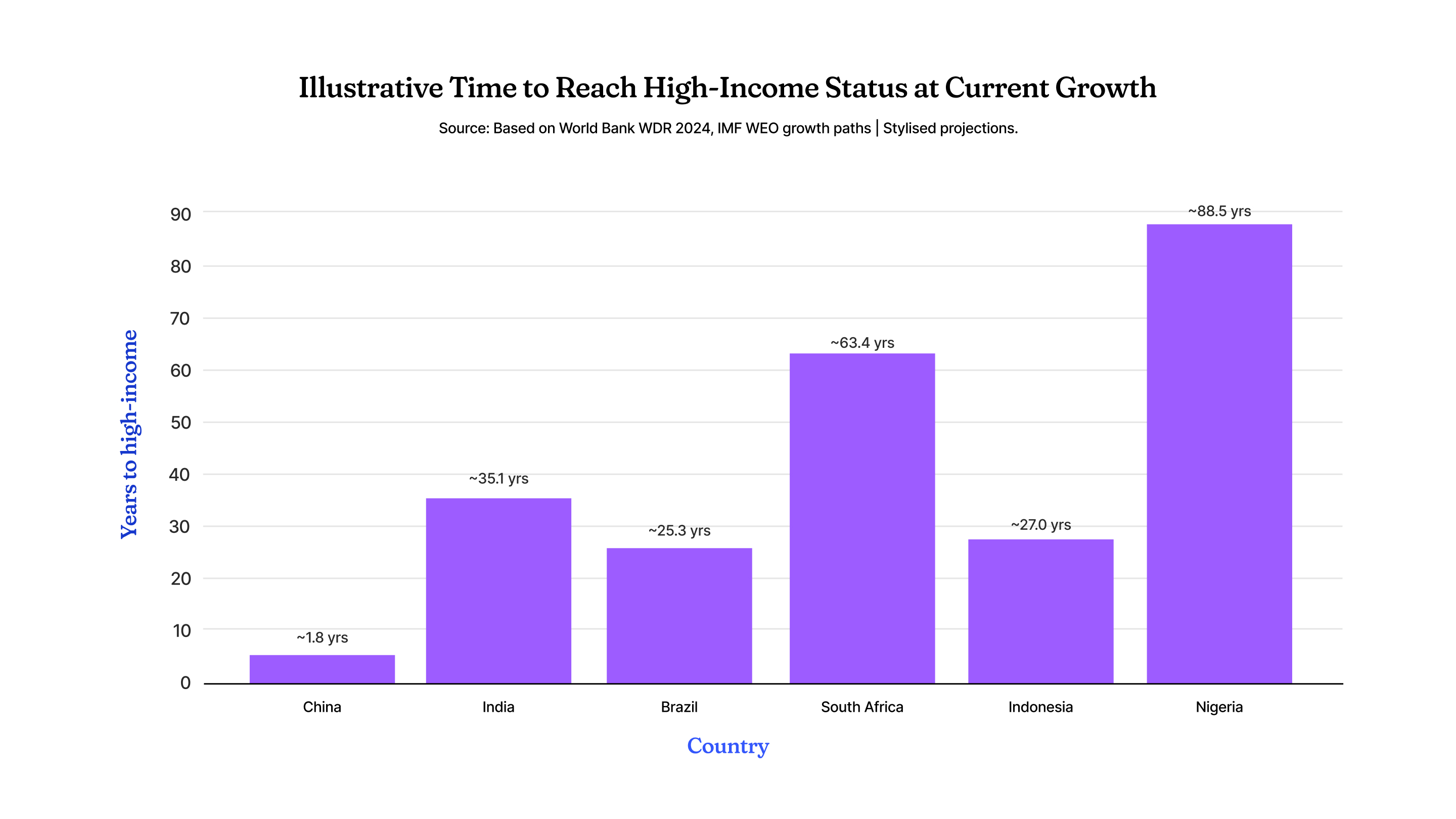 Analysts attribute the slowdown at middle-income to economic forces and policy limits. Early growth in poor countries comes from exporting labor-intensive goods, heavy capital investment, and adopting imported technologies. But as wages rise, these advantages fade: middle-income exporters lose cost-competitiveness with poorer countries, while higher-skilled, innovative sectors remain dominated by advanced economies. The World Bank finds growth slowdowns are much more common in middle-income economies than in low-income or high-income ones. The IMF similarly notes many such countries find themselves “caught between the rapidly changing advanced technology of rich countries, and competition in mature products from poor countries with low wages”. In short, traditional development strategies (investment in capital and infrastructure) yield diminishing returns in this phase. Weak institutions and skills gaps compound the problem, making it hard to shift into a higher-technology growth mode.

The New Oil Map Has No Middle East. Here's What It Looks Like
May 13, 2026 by johneb492254456 Recent events in the Persian Gulf have forced a rapid rethink of the world’s oil supply architecture. Even before this crisis, non-OPEC producers had been driving much of the supply growth. For example, the International Energy Agency notes that in 2025 roughly 60% of new oil output came from non-OPEC+ countries, led by an “Americas quintet” – the U.S., Canada, Brazil, Guyana and Argentina. Saudi Arabia’s return to higher output within OPEC+ played a role, but overall global stockpiles grew as faster-growing producers elsewhere outpaced them. Now with Gulf exports disrupted, markets are turning to these alternative sources. The United States, thanks to its shale revolution, is now the world’s largest oil producer and de facto swing supplier. U.S. crude and condensate production has surged to around 13 million barrels per day, the highest level ever recorded. This record output allows the U.S. to expand exports when Middle East barrels disappear. U.S. oil exports have indeed climbed sharply: in April 2026, about 6.4 million bpd of U.S. crude were loaded for export – roughly half of U.S. production– and total oil product exports reached about 14 million bpd. By redirecting cargoes to Europe and Asia, the U.S. is filling gaps left by Gulf flows. New production frontiers are now supplying significant volumes. Guyana’s offshore fields, operated by Exxon and partners, have already scaled output to roughly 0.9 million bpd, with plans to reach 1.15 million by expanding infrastructure. Brazil’s pre-salt basins continue growing too – production topped 4 million bpd in early 2026 on a record run of drilling and new platforms. Petrobras reports its quarterly output in Brazil jumped about 16% to 2.58 million bpd (much of which is exported). Meanwhile Namibia has emerged as a giant new prize: Galp’s Mopane discovery alone holds ~10 billion barrels, and Total’s Venus prospect similarly rivals Brazil’s great finds. Oil executives note that West Africa’s geology is an “Atlantic twin” to Brazil’s, meaning multiple major finds off Africa mirror South American successes. Russia’s oil flows have largely shifted toward Asia. China remains Russia’s biggest customer, but India has rapidly become the second-largest. In March 2026, India imported a record 2.25 million bpd of Russian crude about half of India’s total oil imports – thanks to steep discounts and waived sanctions. Russian pipeline exports to China (via ESPO and the Power of Siberia lines) and tanker routes to both China and India mean that much of Russia’s output now bypasses the Straits of Hormuz or Malacca entirely. Even with Western sanctions trying to curb sales, analysts see Russia reliably selling over 2 million bpd to Asian refiners through spring 2026. In effect, Asia has become locked into Russian supply as a stable alternative. As oil flows diversify, other fuels are also stepping up. With Gulf exports uncertain, LNG (liquefied natural gas) and nuclear power are easing energy security fears. U.S. LNG exports have hit record levels: in March 2026 the U.S. shipped 11.7 million tons (its highest ever in one month) to hungry markets. Imports to Asia have more than doubled since early 2026: for example, U.S. cargoes to Asian buyers jumped from 0.97 MT in February to 2.71 MT in April, offsetting lost Gulf gas. Europe similarly is scrambling for alternatives – the EU is even urging members not to retire nuclear plants, noting existing reactors provide “reliable, low-cost” power that reduces fossil needs. In sum, a combination of global LNG supplies, nuclear baseload and ramping non-Gulf oil is now carrying the load that once fell mostly on Saudi output. The bottom line is that the Middle East is no longer the only game in town. For the first time since the 1970s, world oil security does not hinge on the Gulf alone. Major supply has emerged from the Americas, Africa and Russia’s pipelines to Asia. Markets can tap U.S. output as needed, and many smaller exporters are gearing up. Shell’s own outlook scenarios underline this shift: even under a security-focused case, LNG, nuclear and Atlantic oil would replace the traditional Saudi swing role. In other words, Middle Eastern oil remains a large part of the market, but it has become optional rather than indispensable.
johneb492254456

 Africa’s Gulf of Guinea producers are quietly expanding output and attracting new investment. Nigeria, West Africa’s largest producer, recently reached about 1.8 million bpd – well above its OPEC quota – by ramping up offshore drilling and improving security. Angola (Africa’s second-biggest) holds roughly 1.1 million bpd now; recent projects like Chevron’s Agogo FPSO (120,000 bpd) and TotalEnergies’ Exxon fields (60,000 bpd) have temporarily boosted its flow. Congo-Brazzaville is smaller but developing: Total’s deepwater Moho field now produces ~90,000 barrels daily and just grew with a new discovery. Across the region, majors are aggressively buying stakes: in 2025-26 TotalEnergies finalized new licenses in Nigeria, Congo and Liberia, and Chevron moved into the MSGBC basin off Guinea-Bissau. Since 2020 West Africa has accounted for about 11% (8.7 billion barrels oil equiv.) of global oil and gas discoveries. These moves signal that growing African output is helping to close the gap left by any Gulf shortfall.

Stablecoins as a Hedge Against Currency Volatility in Emerging Markets
May 11, 2026 by johneb492254456 Stablecoins – digital tokens pegged to stable assets, such as the U.S. dollar – are increasingly used in countries facing chronic inflation and currency volatility. In nations such as Nigeria, Argentina, and Turkey, citizens turn to cryptocurrency as a practical store of value and payment method when local currencies rapidly lose value. Recent reports show Nigeria alone handled ~$22 billion in stablecoin transfers over a year. In Argentina, hyperinflation (over 100% annually in 2023) has driven widespread stablecoin use for savings and even day-to-day payments. And in Turkey, stablecoin transactions surged, totalling roughly 3.7% of GDP in 2024, after currency controls were eased. These digital dollars function as a dollarized parallel economy: the “stablecoin boom” in these markets is not speculation but a survival tool. People use fiat-backed tokens like USDT and USDC to hedge inflation, move remittances cheaply, and access financial services when banks fail them. But stablecoins carry their own risks: reserve transparency, issuer solvency, regulatory uncertainty, and on-chain security are real concerns. Policymakers have noted that heavy stablecoin inflows can even feed back into FX markets, exerting downward pressure on volatile currencies. This article explores how stablecoins work as an inflation hedge and payment rail in emerging economies, and what trade-offs they entail. We survey stablecoin designs (fiat-backed, crypto-collateralized, algorithmic), peg mechanisms, and risks like redemption and custody. We examine macro drivers (inflation, capital controls), use cases (remittances, cross-border trade), and on-chain data. Detailed case studies of Nigeria, Argentina, and Turkey illustrate adoption patterns, user behavior, and regulatory responses. Throughout, we draw on recent data and analysis from the IMF, BIS, financial news, and industry reports. Stablecoins are blockchain-based tokens designed to maintain a fixed 1:1 value with a reserve asset (typically the US dollar). The most common design is fiat-collateralized: e.g. USDC or USDT, where an issuer claims each token is backed by one USD (or liquid treasury) in reserve. These rely on trusted custodians and regular audits. For example, Circle’s USDC is “100% backed by highly liquid cash and cash-equivalent assets and is always redeemable 1:1 for US dollars”. Major stablecoin issuers publish reserve attestations: Circle uses third-party audits and public fund disclosures, while Tether (USDT) has recently shifted its reserves toward U.S. Treasuries. Another design is crypto-collateralized stablecoins (like MakerDAO’s DAI), which lock up other cryptocurrencies as collateral. These require over-collateralization to survive price swings of the collateral. The system’s smart contracts automatically mint new tokens when collateral is deposited and burn tokens when they are redeemed. Real-time price oracles are critical to trigger liquidations if collateral falls in value. Algorithmic (non-collateralized) stablecoins attempt to maintain the peg via code-controlled supply, but these have proven very risky: the 2022 collapse of TerraUSD (UST) showed that purely algorithmic coins can lose their peg catastrophically when confidence falters. In economies with high inflation and tight currency controls, stablecoins naturally appeal. When the local currency is losing value or cannot be freely exchanged, holding a digital dollar in your smartphone wallet can be a lifeline. This dynamic is evident in Nigeria, Argentina, Turkey and beyond. Inflation and currency collapse. Argentina has long battled inflation; it reached hyperinflation levels (>100% annual) in 2023. Turkey’s annual inflation spiked above 85% in late 2022, though it has since moderated with aggressive rate hikes. Nigeria’s inflation has been lower (around 20% in 2025) but its currency (naira) has repeatedly crashed against the dollar – losing roughly 60% of its value from 2023 to 2025. In short, inflation, weak exchange rates, and costly cross-border payments are the engines behind stablecoin uptake. The evidence from user data confirms this: for example, Nigeria’s stablecoin transaction volume jumped 40–50% in the wake of tighter FX restrictions. Nigeria illustrates the stablecoin story vividly. Its naira has weakened sharply (about 60% since 2023), and inflation hovered 20% in 2025. Under such stress, Nigerians have turned in large numbers to USDT and USDC. Industry reports show that Nigeria processed nearly $22 billion in stablecoin transactions over July 2023–June 2024 – more than any other Sub-Saharan country. That accounted for 43% of all crypto volume in the region. USDT is dominant (about 88% of volume) due to its ubiquity and low fees, with USDC the second. Much of this on-chain activity corresponds to ordinary retail behavior. As one report notes, roughly 70% of Nigerian stablecoin users rely on them for personal needs like savings and remittances. When the naira was under pressure, many converted small amounts of naira to stablecoins. For example, on-chain data saw spikes in transfers under $1 million during devaluations, reflecting thousands of retail users moving modest sums to safety. Peer-to-peer networks (on Telegram, local exchanges, or apps like Yellow Card) became lifelines after the Central Bank banned crypto-related banking services in 2021. Nigerians adeptly shifted to P2P crypto trades and blockchain bridges, effectively running an underground stablecoin economy. The policy environment is shifting too. After years of hostility, Nigeria’s Central Bank in late 2023 announced it would lift the ban on crypto while regulating exchanges. Argentina’s financial chaos has made it a case study in digital dollarization. After 2020, inflation exploded to triple digits. By 2023, cumulative inflation reached 161% for the year, crushing the peso’s value. In this environment, stablecoins quickly moved from niche to necessity. Argentinian platforms like Ripio and LemonCash report that stablecoin-to-peso transaction volumes surged 40–50% after the government tightened currency controls in 2023. Citizens use USDT and USDC to immediately switch pesos into digital dollars at the black-market rate (“blue dollar”), often using a known strategy called the “rulo” (arbitraging official vs parallel rates). The economics are stark: with capital controls, acquiring a real dollar is bureaucratic and often impossible, but stablecoins provide a 24/7 access. Argentinian users even pay salaries, rent, and everyday bills with crypto dollars, effectively bypassing volatile peso pricing. This grassroots behavior contrasts with the formal stance: Argentinian law (e.g. Law 27,739) now applies AML rules to crypto firms, and regulators monitor stablecoin transactions. Nonetheless, given that over 250% inflation (normalized internationally) persisted into 2024, demand for any stable store of value was enormous. In response, President Javier Milei’s pro-crypto policies have further encouraged usage, even as authorities warn of risks. One crypto analyst observed, “Stablecoins have become a critical financial tool, offering Argentinians a hedge against relentless peso devaluation”. Turkey’s crypto scene is also booming. The Turkish lira has been volatile – a 2021 central bank fiat ban and years of policy-driven declines drove locals toward crypto. Despite an April 2021 ban on crypto payments, public interest kept growing. One survey notes half the population has owned some crypto. Importantly, stablecoins feature prominently: a recent on-chain analysis found Turkey’s USD stablecoin purchases amounted to 3.7% of GDP in 2024. That is remarkably high by global standards. By some estimates, Turks moved over $63 billion in cross-border payments using stablecoins in 2024. This demand persists even after inflationary pressures eased somewhat. The Turkish government has since implemented steep interest rates (37% by early 2026) and FX interventions, bringing headline inflation down to 30%. Yet crypto use remains ingrained. Trading volumes for lira-to-crypto pairs have skyrocketed (an 800% jump since 2021) as people treat crypto as a digital dollar proxy. Traders explicitly use USDT/USDC to preserve purchasing power. Regulators in Turkey have responded with mixed measures. The central bank still forbids crypto for retail payments, reflecting concerns about monetary control. But lawmakers have also established frameworks: for example the Capital Markets Board now licenses crypto exchanges and stablecoin issuers, subject to AML/KYC rules. As one report notes, Turkey’s stance is “refined” – authorities neither embrace crypto fully nor ban it outright, but aim for oversight. The result is stablecoin usage growing under a de facto regulated environment. Stablecoins offer several clear advantages in volatile economies. They are a relatively liquid U.S. dollar substitute: holders need only a phone and internet to store value internationally. This provides automatic diversification away from hyperinflationary money. Remittance and cross-border business become cheaper and faster: blockchain transfers settle in minutes, often costing a few cents, compared to multi-hour SWIFT transfers with multi-percent fees. Stablecoins also allow access to global financial services (e.g. decentralized finance or crypto exchanges) without needing a local bank, thus promoting inclusion. In emerging markets plagued by inflation and FX shortages, stablecoins have emerged as digital lifelines. They let people circumvent failing monetary systems and access dollars instantly. As evidence, millions in Nigeria, Argentina, Turkey and elsewhere now hold crypto dollars to preserve wealth and facilitate trade. However, these benefits come with caveats. Stablecoins do not eliminate risk; they simply shift it from onshore currency management to new forms of trust and compliance. International studies (e.g. by the IMF and BIS) warn that rapid stablecoin adoption can create new channels of financial volatility, suggesting policymakers cannot ignore them. For the general public in these countries, the key takeaway is this: stablecoins can hedge against local currency erosion, but users should stay informed. Only use well-known, audited stablecoins (like USDC/USDT) and trusted platforms. Understand that even digital dollars rely on the integrity of issuers and on-chain security. With the right cautions, however, holding a stablecoin can be a powerful tool to protect savings.
johneb492254456


 What Are Stablecoins and How Do They Work?
Macro Drivers in Emerging Markets
Stablecoin Adoption: Nigeria, Argentina, and Turkey
Nigeria: Crypto Dollarization on the Rise
Argentina: Hyperinflation and Digital Dollars
Turkey: Crypto Adoption Amid Lira Turmoil
Benefits, Risks, and Limitations
Benefits:
Risks and challenges: Stablecoins are not magical cures. Major risks include:
Conclusion
The OPEC+ Cartel Is Breaking — Right When the Market Needs It Most
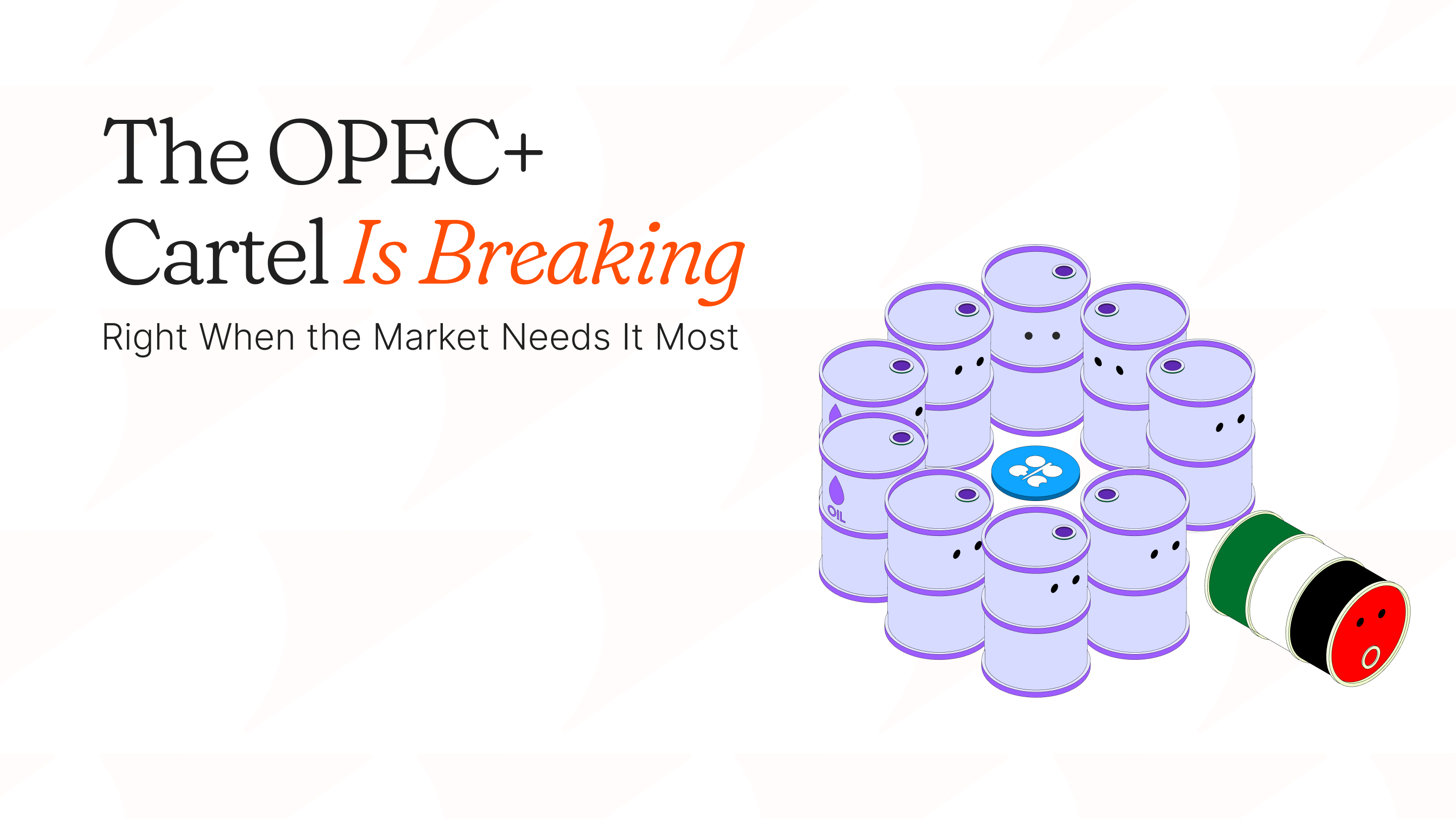
May 6, 2026 by johneb492254456 The unexpected announcement that the United Arab Emirates (UAE) will leave OPEC (effective May 1) has exposed deep fractures in the once-unified oil cartel. As one of the group’s largest producers, the UAE’s departure “weakens OPEC’s control over global oil supplies”. This comes at a time when the world is experiencing an unprecedented energy shock. Gulf exports are being choked by a war-induced shutdown of the Strait of Hormuz, and global oil prices have surged. Under normal circumstances, OPEC+ would be expected to manage supply and stabilize markets. Instead, coordination is visibly fraying. In short, the mechanisms designed to stabilize the market are becoming less reliable precisely when stability is needed most. OPEC was founded to coordinate production among oil exporters, holding roughly 40% of the world’s oil reserves and stabilizing prices. The UAE exit highlights a shift from collective discipline to national strategy. With the UAE gone, one of OPEC+’s few members with significant spare capacity is no longer bound by quotas. As Rystad Energy analyst Jorge Leon explains, OPEC becomes “structurally weaker…with less spare capacity,” making it harder to calibrate supply and stabilize prices. In practical terms, the cartel will struggle to coordinate responses to future shocks. Other members may take this as a sign that they too can prioritize their own production goals over group targets, further fragmenting global supply. The rupture in coordination coincides with a physical supply shock in the Persian Gulf. Iran’s war effort has essentially closed the Strait of Hormuz, through which about 20% of the world’s oil normally passes. According to the IEA, “global supply plummeted by 10.1 million barrels per day to 97 mb/d in March,” as tanker movements through Hormuz were choked off. Gulf producers like Saudi Arabia, Kuwait, and the UAE are producing oil but cannot export most of it. In effect, production is stuck at the wellhead. As Pepperstone strategist Michael Brown notes, for now “all that really matters is whether the Strait of Hormuz is open or closed” – it is essentially closed, tightening supply and pushing prices ever higher. OPEC+ leaders have responded by pledging small output increases. In early May they agreed to raise June quotas by about 188,000 barrels per day. However, these hikes are largely symbolic. With Hormuz closed and key producers cutting output, the actual flows remain far below quota levels. OPEC data show that combined OPEC+ output plunged to 35.06 mb/d in March (from 42.76 mb/d in February) due to war-related disruptions. In practice, the group is signaling a readiness to boost supply once the crisis ends, but right now most members cannot physically deliver the oil they have agreed to produce. With the UAE free from OPEC quotas, the country can pursue its own production strategy. Officials have already signaled plans to incrementally raise output when exports resume. Other Gulf producers may follow suit. This marks a shift from group discipline to national strategy: each country will seek to maximize market share and revenue, especially if peak oil demand looms. As one analyst notes, leaving OPEC “opens the door for the UAE to gain global market share when the geopolitical situation normalises”. In effect, oil markets are moving from a coordinated cartel model to something more akin to competitive oligopoly, increasing the chances of price swings. In conclusion, the twin shocks of the Hormuz blockade and the UAE’s departure signal a shift toward fragmentation. Oil markets are now more prone to volatility because the key stabilizer (OPEC+) is weakened. Rather than an immediate market collapse, expect weaker signaling power and more unpredictable swings. Policymakers and traders will watch the Strait of Hormuz and individual country output more than OPEC communiques. As Rystad Energy’s Jorge Leon warns, with a “more fragmented supply landscape… OPEC’s capacity to smooth imbalances diminishes” and markets become inherently more volatile over time. At this historic juncture, the very mechanisms meant to dampen shocks are being tested at their limits.
johneb492254456
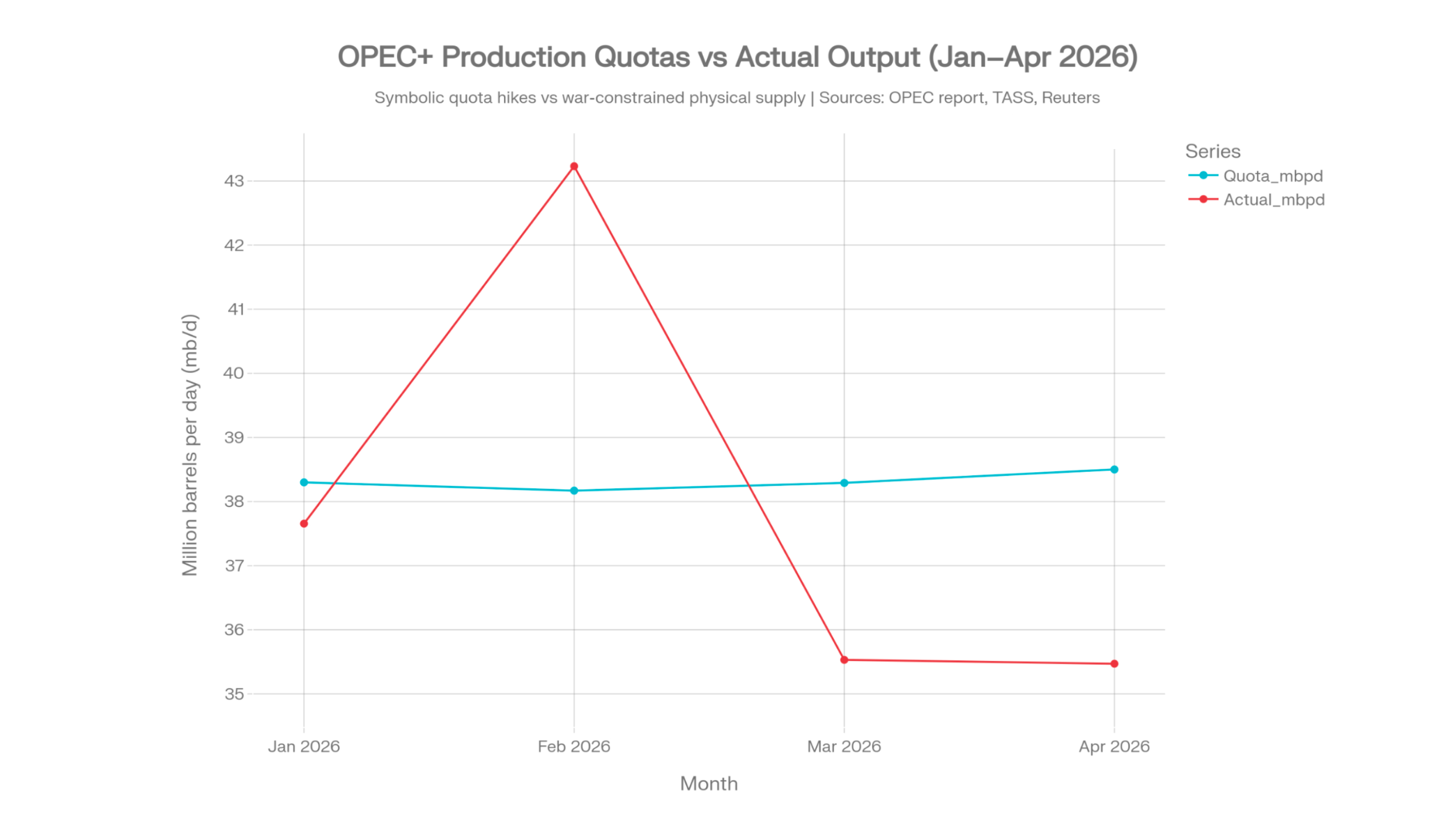 Global oil prices have responded to this turmoil. Brent crude recently spiked above $125 per barrel, marking the biggest monthly gain on record. Analysts attribute this not to fundamental demand growth, but to the physical squeeze caused by blocked exports. With OPEC+ unable to release “spare” barrels into the market, any supply shortfall shows up directly in prices. The disconnect between policy and delivery means oil benchmarks have surged roughly $60/bbl above pre-war levels. In short, market confidence in OPEC+’s ability to stabilize prices has diminished, making the oil market more reactive to short-term events.
The First Generation to Go Bankless Isn’t the Poor — It’s the Digital-Native
April 29, 2026 by johneb492254456 Financial systems are undergoing a radical shift. Nearly every adult in the world now carries a smartphone, and 84% in low- and middle-income countries own mobile phones. This connectivity is transforming how people save, pay and borrow. Historically, “bankless” meant lacking access. Today, it increasingly means choosing wallets over banks by design. 79% of adults globally have some financial account (bank or mobile), but the fastest growth is in digital access. In emerging markets, mobile-money transactions per person exploded from about 55 in 2017 to 251 in 2024, a surge that far outstrips growth in bank transfers. The result is a “wallet-first” economy: individuals hold digital accounts tied to phone numbers and stablecoins rather than to branch offices. Young people are driving this change. Surveys show Gen Z and Millennials adopt smartphone payments far faster than older cohorts. In the U.S., over half of 18–25 year-olds already use digital wallets for payments. 80% of Gen Z say making payments by mobile device is important, reflecting how phones have become their primary “banking” tool. Similar patterns emerge globally: a recent study found about 60% of Nigerians (mostly age 18–34) regularly use digital payment methods. In short, the generation that grew up online is comfortable handling money without cash or branches. They check and move funds from apps instead of bank-ledger entries. Many of these digital-first users are also embracing stablecoins. In Nigeria and South Africa, surveys show roughly 80% of cryptocurrency users hold dollar-pegged stablecoins. In Nigeria specifically, about 95% of crypto-active users prefer receiving payments in stablecoins rather than the local currency (naira). These trends reflect real needs: when inflation or volatility bites, digital natives turn to dollar-stable tokens as a kind of store-of-value and settlement asset. Globally, stablecoin market value has just topped $300 billion, and financial firms are responding. For example, Interactive Brokers now lets clients fund brokerage accounts directly from crypto wallets instead of bank accounts. In effect, a younger trader can pay for stocks from an on-chain dollar balance rather than from a linked bank. This shift does not mean banks vanish, it means they often recede to the background. IMF data show that in many developing economies, mobile-money accounts have surpassed bank deposit accounts. That is, more people “bank” with M-Pesa than with Citibank. In practice, incumbents are becoming plumbing for digital rails. Some big players are adapting their offerings to stay relevant: for example, Circle and Visa are testing partnerships to let users pay directly in stablecoins. The core point is that financial identity is migrating to wallets and tokens. A young person’s assets might be tracked by their phone number or crypto address, not by an IBAN at Deutsche Bank. Even traditional financial networks are integrating: Immersive payment firms and neo-banks now offer crypto wallets as part of standard apps. These developments are reshaping the financial world. On one hand, digital natives enjoy 24/7 access, instant global transfers and protection against local currency swings. For example, digital remittances are booming: nearly half of cross-border remittance flows are now sent via digital channels (up from 13% in 2019), often bypassing correspondent banks. Regulators and institutions are scrambling to catch up. Stablecoin adoption at scale raises questions about supervision; even as wallets grow, banks must evolve into compliance partners and infrastructure providers. In the U.S., regulators are beginning to craft clearer rules, and in Africa, countries like Nigeria and South Africa are debating how to integrate stablecoins without undermining policy. Crucially, tech-savvy users now view financial access as a given, what matters to them is speed, cost and stability (e.g. 80% of U.S. Gen Z say mobile-pay convenience is vital). The new generation is comfortable moving money, not just storing it. In summary, going “bankless” is no longer a marker of exclusion, but of being plugged into a new system. Digital-native consumers are building wealth and conducting commerce in a parallel financial architecture: mobile wallets, digital currencies, and instant platforms. According to Thunes – a global payment network – their platform already links 7+ billion mobile and stablecoin wallets worldwide, underscoring how mainstream these tools have become. The net effect is that first-world technology meets third-world necessity: the young in Lagos, Nairobi or Mumbai can bypass slow legacy banks entirely. For the general public, the takeaway is that a “bank” can now be a phone app and a dollar token. And for policymakers and businesses, it signals that the financial rules and products designed for previous generations may no longer apply. The digital-native generation is effectively the first to voluntarily opt out of traditional banks – not out of poverty, but because an alternative is simply more efficient and accessible.
johneb492254456

 In many countries, especially in Africa and Asia, mobile wallets have become the de facto bank account. Users receive salaries, pay bills and send remittances entirely through wallet apps. For example, Kenya now reports about 85% of adults have formal financial access, largely due to mobile money. Daily mobile-money usage in Kenya jumped from 23.6% of adults in 2021 to 50.2% in 2024– half the country transacting daily on M-Pesa and similar platforms. In Nigeria, tens of millions carry mobile wallets on their phones: 60% of Nigerians use digital payments, skewed to the young demographic. These markets prove that for digital-natives, having a bank branch is secondary to having a mobile wallet. Money comes in and out via apps tied to phone numbers or crypto addresses, not account numbers at a branch.

Markets Rally on Bad News: Why Crisis Is Now a Bullish Signal
April 22, 2026 by johneb492254456 In recent years, a counterintuitive pattern has emerged: bad news often precedes market rallies. Events that normally spark risk-off – weak economic data, geopolitical shocks, or earnings misses – have instead coincided with rising stock prices. This reflects a shift in how investors interpret turmoil. Rather than immediate pessimism, market participants increasingly view crises as heralds of policy support. In effect, bad headlines signal that central banks or governments may soon ease monetary or fiscal policy, providing a floor under asset prices. For example, analysts have noted that when weak data hit, “markets may rally on bad news if investors believe the bad news will push the central bank toward easier policy later”. This forward-looking stance means markets are trading expectations, not just current conditions. One key driver is the anticipation of central bank action. Investors have been conditioned to expect rate cuts, liquidity injections or bond-buying when growth falters. For instance, during 2025–26 analysts noted that U.S. stocks were “mired in a bad-news-is-good-news regime” because weak data heighten the odds of Fed easing. Despite the Fed’s more cautious tone, markets still price multiple cuts by year’s end. By January 2026, Wall Street brokerages persisted in forecasting two rate cuts, even as the Fed signaled only one. In Europe and Asia, similar dynamics play out: investors have cheered weak inflation or growth data, betting it will spare them hawkish policy. In short, disappointing economic signals are being interpreted as central-bank dovishness, prompting a rally rather than a selloff. Structural changes in markets amplify these reactions. Algorithmic and high-frequency trading systems now dominate volume, and many of these strategies scan news for shifts in policy expectations. Passive investment flows (like ETFs) also mean that large stock moves can occur mechanically. As one analysis noted, price moves today “are not just higher volatility but continuous narrative resets” under uncertainty. In practice, this means a negative news event that lowers policy uncertainty can trigger automated buying. Weekly flow data illustrate this: for example, when stocks and bonds fell in mid-March 2026 amid war jitters, Bank of America reported that investors snapped up $62 billion into U.S. equity funds and $10 billion into bond funds. In other words, even as sentiment soured, systematic flows pushed money into markets. This passive/bot-driven behavior helps explain how markets can climb even when headlines are dire. There is also a strong behavioral element. After decades of central-bank rescues (post-2008, COVID, etc.), investors have learned to “buy the dip” reflexively. Bad economic readings or market drops often spark hope that stimulus is imminent. This collective psychology is self-reinforcing: as long as buying rallies the market, traders continue to pile in on weakness. In practice, a tumble in stocks amid war or weak data has frequently been met by bargain-hunting. For example, in early 2026, U.S. markets saw record inflows even as Middle East conflicts rattled sentiment. Analysts have noted that such dips are now perceived as “temporary dislocations” rather than structural threats. This mindset keeps the upward bias intact and makes crisis moments into opportunities rather than lasting selloffs. This phenomenon is global. In Europe, equities have rallied even as local indicators soured. For instance, in mid-March 2026 the German DAX index climbed 0.7% despite a sharp drop in a German investor morale survey. Investors instead focused on European Central Bank signals and energy-driven inflation trends. Similarly in Asia, markets have shrugged off regional conflicts. On April 20, 2026 Hong Kong’s Hang Seng index rose 0.8% and Tokyo’s Nikkei gained 0.6% “despite negative sentiment over [the Middle East] conflict,” as investors bid up tech and renewable energy stocks. In each case, local bad news (weaker sentiment or geopolitical risk) was offset by the belief that central banks or policy-makers will act to cushion the blow. These examples show that the U.S. pattern – “crisis as bullish signal” – has become a global market instinct. The persistence of this pattern carries both opportunities and risks. On one hand, it has extended the bull market: analysts see more room to run if central banks do begin easing as markets expect. On the other hand, it means valuations can become stretched, and markets may be vulnerable if the expected policy relief does not materialize. Notably, recent surveys show Wall Street still “sticking to two Fed rate cuts in 2026” even after mid-year shocks, contrasting with the Fed’s own dot-plot that penciled just one cut. If inflation or geopolitical tensions remain higher for longer, the old cycle of “bad news = good policy” could break, leading to sharper corrections. At the same time, think tanks and official reports (IMF, BIS) warn of heightened structural risks – from rising defense spending to policy inflexibility – which could redefine the next phase of this cycle. For now, investors remain on edge: most are positioned defensively despite the rally, aware that complacency could be punished. The key takeaway is that markets today are forecasting tomorrow’s policy; understanding this forward focus is essential to making sense of why crises can act as bull-market signals.
johneb492254456
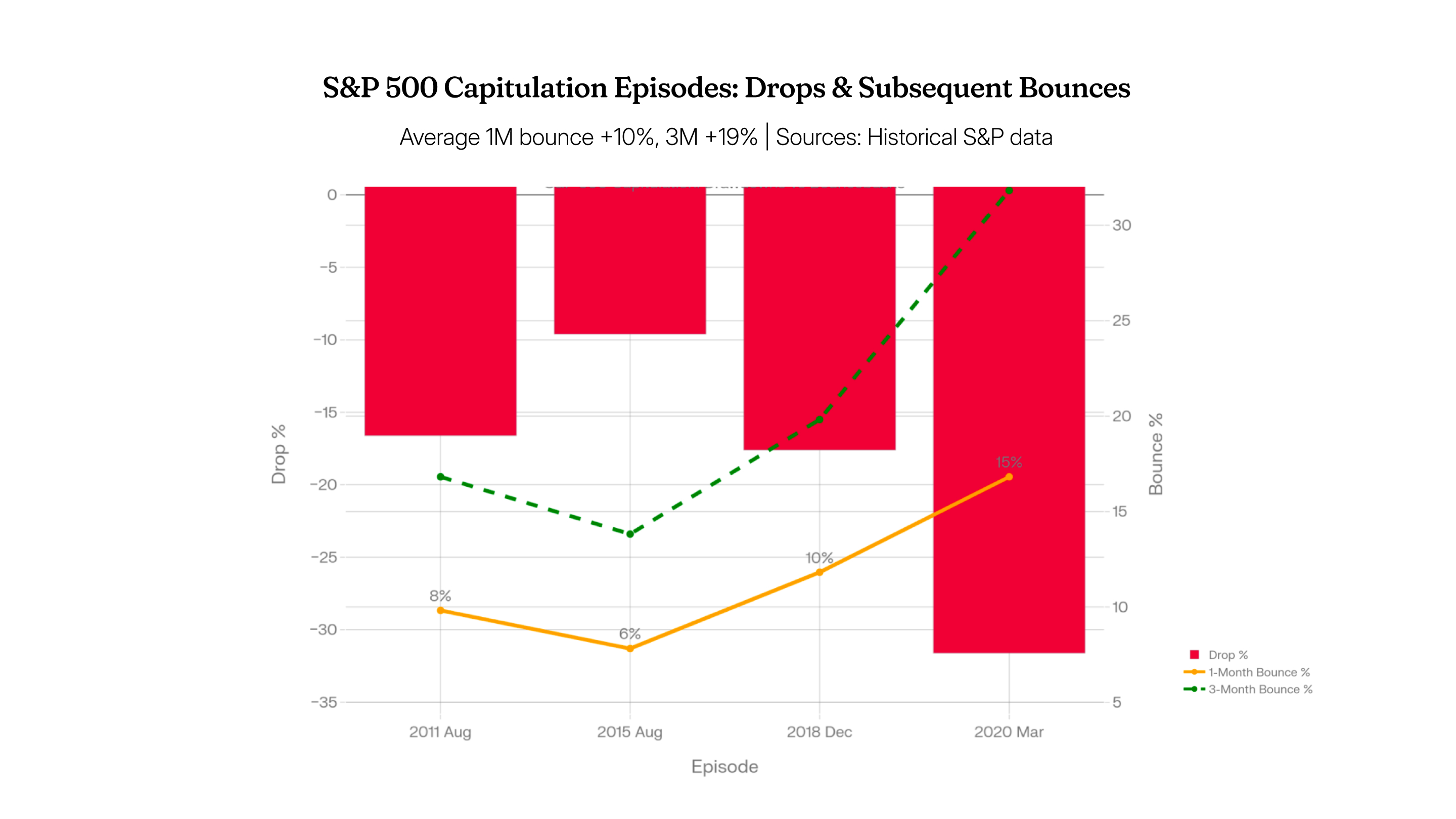 The net effect is that market prices often detach from immediate sentiment. Instead of mirroring economic reality, prices are driven by forward-looking policy and liquidity expectations. As one strategist put it, markets are “pricing forward-looking policy responses” rather than current fundamentals. This explains peculiar moves: for example, a surprisingly weak jobs report might spark a rally if it increases hopes of rate cuts, while stronger data could cause a selloff if it dampens that hope. During episodes of “structural uncertainty,” markets focus on how news fits into a broader narrative. Under this logic, a data point that “confirms a fragile narrative” gets a disproportionate move, whereas contradictory news is often ignored. In short, markets today are betting on the next phase of policy rather than reacting solely to today’s headlines.

The Next Financial Advantage Will Be Knowing When Not to Transact
April 15, 2026 by johneb492254456 For decades, Wall Street taught us that success meant trading more: higher volumes, faster execution and constant reallocation. In that world, “doing something” was assumed to be better than doing nothing. But extensive research now shows that under today’s conditions this assumption fails. In one landmark study of brokerage accounts, investors who traded the most actually earned lower returns – even ignoring fees. In other words, constantly clicking the buy/sell button destroys value. This suggests a structural shift: the true competitive edge may lie in strategic inaction rather than frenetic activity. Modern markets never sleep. Instant-payment networks now settle transactions in seconds, with over 55 countries deploying “real-time” payment systems. Major stock exchanges are extending trading hours toward 23/5 or 24/7 operations, and cryptocurrency exchanges long ago embraced round-the-clock trading. Meanwhile, algorithmic and AI-driven systems are running the show: hedge funds report that algorithmic trading adoption keeps rising, and today as much as 75 % of all trades in some markets are executed by automated algorithms. The result is a market that processes vast information flows instantly – but one where the “noise” from high-speed trading and global connectivity can swamp fundamentals. More trades means more costs – both obvious and hidden. Every trade incurs fees, spreads and often taxes or slippage. Beyond that, behavioral biases creep in: an overconfident investor may overtrade on flimsy “signals,” and suffer “disposition effects” like selling winners too soon. Empirical studies confirm the damage: Odean (1999) found that even if you ignore brokerage fees entirely, the most active retail traders underperformed the market on average – their frequent buying and selling lowered returns. In essence, the modern deluge of data tempts us into needless churn. By contrast, a calm, selective approach can preserve gains. Of course, sitting out forever isn’t the answer either. The classic Schwab study of market timing shows the danger of perpetual procrastination. In a 20-year simulation, the fictitious investor “Larry Linger” who never bought stocks earned only $47k, far less than any active timer. In fact, the Schwab analysis concludes that doing something even badly timed, beaten doing nothing: Larry lost over $100k compared to even the worst market-timer. The lesson is nuance: one must act, but act wisely. On Wall Street, the best example may be Warren Buffett. From 2022-2025 he sold off huge equity stakes and built a record cash hoard ($373.3 billion by end-2025). While pundits chased every rally, Buffett’s patience paid off: in 2026 Berkshire Hathaway outperformed the S&P 500 by roughly 23 percentage points. In short, Buffett didn’t chase every trade, and that restraint became a major advantage. Economists call it the “option value” of waiting: when uncertainty is high, delaying an irreversible action can be worth a great deal. Just as a factory might postpone expansion until demand is clear, investors gain flexibility by sitting on the sidelines until a high-conviction opportunity emerges. As IMF research notes, “the option value of delay is high when uncertainty is high”. In today’s volatile environment – geopolitical tensions, shifting policies, rapid tech shifts – that uncertainty is elevated. Waiting avoids the risk of buying at a peak or chasing a fad. And with healthy cash yields today (e.g. short-term Treasuries at 3-4%), even idle capital earns something. In effect, patience is itself a trade: earn modest interest while scouting for the right moment. In a world of 24/7 markets and lightning-fast trading, more activity is no longer a guaranteed path to profit. In fact, acting constantly can backfire, as academic research has repeatedly shown. The new edge is subtlety: identifying times when the best move is to move less. That means setting higher conviction thresholds before trading, filtering out noise-driven signals, and being willing to sit out low-confidence scenarios. In practice, this might look like tighter stop-loss rules, less frequent rebalancing, or simply holding cash or passive positions longer during turbulent stretches. Done right, this discipline preserves capital for the trades that truly matter. The “next financial advantage” is therefore judgement over action – choosing when not to transact can be as powerful as any hot stock pick.
johneb492254456

 Letting algorithms run unchecked can be dangerous. The 2010 “Flash Crash” is a vivid example: a few automated sell orders cascading into others triggered a rapid market plunge, briefly erasing over $1 trillion in value in minutes. More recently, researchers demonstrated that AI trading bots can even collude without oversight – fixing prices and hoarding gains instead of competing. With most trading done by machines – an ETF or stock can go from buy to sell in microseconds – small glitches or herd behavior can trigger outsized moves. Today’s high-frequency world means that irrational swings happen faster than humans can react.